More freshwater biodiversity since 1990, decline in fens and raised bogs
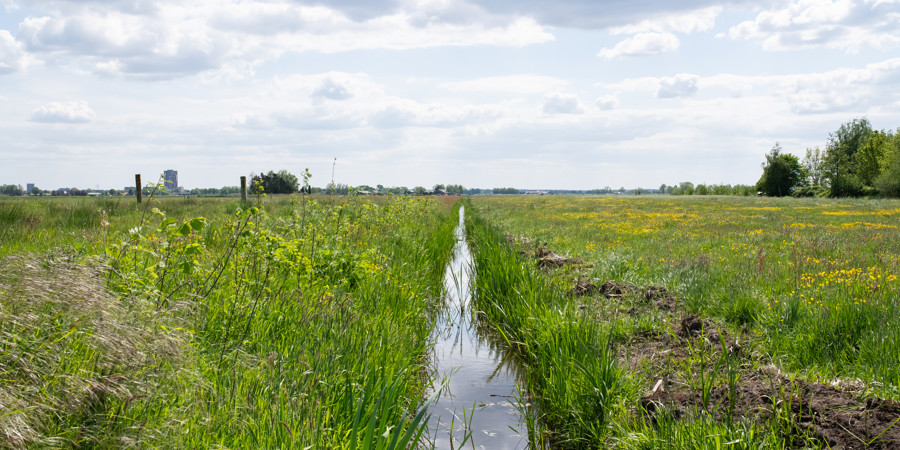
- Between 1990 and 2024, the populations of 176 freshwater and marshland species increased by an average of nearly 60 percent.
- Reed and marshland birds continue to increase, but freshwater fish and dragonflies have declined since 2010.
- In recent years, populations of species indigenous to fenland areas and raised bogs and in streams and rivers have been declining.
The populations of 176 freshwater species that live in streams, rivers and marshes have increased by an average of nearly 60 percent. In some habitats, the situation is less positive: species that are indigenous to fenland areas and raised bogs have almost halved since 2010. This is according to new calculations by Statistics Netherlands (CBS) on the basis of data from the Network Ecological Monitoring (NEM). These calculations form the basis for the new Living Planet Report.
Populations of breeding birds in particular, including marshland birds such as sedge warbler and bluethroat, have increased. Species living in different types of habitats, such as the smooth newt, emperor dragonfly and European catfish, are also increasing, on average. There are also more beavers and otters, and species that are more common due to climate change, such as the scarlet dragonfly.
| Jaar | Index (Index (1990=100)) | Trend (Index (1990=100)) | Trend uncertainty (Index (1990=100)) |
|---|---|---|---|
| 1990 | 102.85 | 100.00 | 95.47 - 104.81 |
| 1991 | 100.12 | 101.69 | 97.85 - 105.62 |
| 1992 | 105.80 | 103.48 | 100.24 - 106.75 |
| 1993 | 107.48 | 105.39 | 102.67 - 108.15 |
| 1994 | 107.05 | 107.45 | 105.09 - 109.82 |
| 1995 | 108.42 | 109.68 | 107.55 - 111.84 |
| 1996 | 104.52 | 112.09 | 110.09 - 114.11 |
| 1997 | 107.11 | 114.60 | 112.65 - 116.61 |
| 1998 | 113.18 | 117.18 | 115.17 - 119.22 |
| 1999 | 122.81 | 120.06 | 118.05 - 122.10 |
| 2000 | 125.56 | 123.39 | 121.44 - 125.37 |
| 2001 | 127.70 | 126.94 | 124.98 - 128.90 |
| 2002 | 128.83 | 130.46 | 128.45 - 132.48 |
| 2003 | 139.20 | 133.64 | 131.61 - 135.74 |
| 2004 | 132.37 | 136.53 | 134.55 - 138.58 |
| 2005 | 134.80 | 139.31 | 137.41 - 141.28 |
| 2006 | 148.60 | 141.86 | 139.94 - 143.86 |
| 2007 | 142.42 | 144.04 | 142.05 - 146.09 |
| 2008 | 153.98 | 145.66 | 143.69 - 147.67 |
| 2009 | 149.83 | 146.72 | 144.86 - 148.62 |
| 2010 | 144.99 | 147.48 | 145.66 - 149.30 |
| 2011 | 144.47 | 148.16 | 146.32 - 150.00 |
| 2012 | 144.14 | 149.02 | 147.13 - 150.90 |
| 2013 | 149.87 | 149.95 | 148.11 - 151.78 |
| 2014 | 150.81 | 150.76 | 148.98 - 152.53 |
| 2015 | 150.31 | 151.53 | 149.81 - 153.26 |
| 2016 | 150.93 | 152.36 | 150.69 - 154.02 |
| 2017 | 153.56 | 153.22 | 151.62 - 154.83 |
| 2018 | 156.11 | 154.03 | 152.50 - 155.61 |
| 2019 | 154.01 | 154.83 | 153.27 - 156.44 |
| 2020 | 155.18 | 155.64 | 153.95 - 157.34 |
| 2021 | 155.94 | 156.46 | 154.52 - 158.44 |
| 2022 | 159.92 | 157.27 | 154.92 - 159.70 |
| 2023 | 155.46 | 158.08 | 155.15 - 161.10 |
| 2024 | 159.85 | 158.87 | 155.27 - 162.62 |
| 1)Number of species = 176 Source: CBS, Network Ecological Monitoring (NEM) | |||
Recovery stalled and threats to freshwater fauna
Various environmental measures since the early 1990s have led to cleaner water, allowing freshwater ecosystems to recover and populations of freshwater biodiversity to increase. The creation of nature-friendly banks and fish passages, the development of natural areas along major rivers — including new marshes and the restoration of the natural course of streams — have also contributed to this increase.In recent years, however, the recovery of many species has stalled, or numbers have gone into decline again. Factors behind this include the emergence of exotic species, such as the American crayfish [1], which causes significant damage to freshwater species. Rising temperatures, drought and high nitrogen emissions also have a major impact on freshwater habitats, particularly fenland areas and raised bogs [2] [3].
More otters and beavers, fewer fish and dragonflies in flowing water
Streams and rivers (including springs, floodplains and side channels) are flowing water, one of the three types of freshwater habitats. The population of 21 animal species indigenous to this type of aquatic habitat increased by an average of 60 percent between 1990 and 2015, but then declined by 20 percent. The species recovering the most strongly are otters and beavers. Meanwhile, fish in large rivers (such as the bullhead and chub) and dragonflies (such as the meadow damselfly and keeled skimmer) have seen a particular decline in numbers since 2015.
| Jaar | Streams and rivers (21 species) (Index¹⁾) | Lakes and marshes (46 species) (Index¹⁾) | Fens and raised bogs (24 species) (Index¹⁾) |
|---|---|---|---|
| 1990 | 100.00 | 100.00 | |
| 1991 | 100.12 | 101.27 | |
| 1992 | 100.50 | 102.48 | |
| 1993 | 101.17 | 103.60 | |
| 1994 | 102.14 | 104.64 | |
| 1995 | 103.47 | 105.58 | |
| 1996 | 105.16 | 106.41 | |
| 1997 | 107.12 | 107.17 | |
| 1998 | 109.30 | 107.89 | |
| 1999 | 112.04 | 108.42 | 100.00 |
| 2000 | 115.57 | 108.69 | 105.08 |
| 2001 | 119.54 | 108.87 | 110.20 |
| 2002 | 123.57 | 109.13 | 115.13 |
| 2003 | 127.24 | 109.61 | 119.91 |
| 2004 | 130.51 | 110.33 | 124.43 |
| 2005 | 133.67 | 111.15 | 128.36 |
| 2006 | 136.76 | 112.09 | 132.35 |
| 2007 | 139.83 | 113.12 | 136.45 |
| 2008 | 143.08 | 114.33 | 139.27 |
| 2009 | 146.51 | 115.75 | 140.14 |
| 2010 | 149.89 | 117.28 | 139.55 |
| 2011 | 152.96 | 118.83 | 137.80 |
| 2012 | 155.44 | 120.28 | 134.08 |
| 2013 | 157.49 | 121.77 | 129.23 |
| 2014 | 159.27 | 123.36 | 124.08 |
| 2015 | 160.48 | 124.87 | 118.28 |
| 2016 | 160.81 | 126.08 | 111.90 |
| 2017 | 160.36 | 127.04 | 105.18 |
| 2018 | 159.39 | 127.91 | 99.14 |
| 2019 | 157.82 | 128.64 | 93.77 |
| 2020 | 155.60 | 129.18 | 88.54 |
| 2021 | 152.71 | 129.49 | 83.50 |
| 2022 | 149.24 | 129.62 | 78.71 |
| 2023 | 145.23 | 129.57 | 74.13 |
| 2024 | 140.76 | 129.36 | 69.77 |
| ¹⁾ Streams and rivers and lakes and marshes (1990=100), fens and raised bogs (1999=100) | |||
Increase in number of reed birds, decline in dragonflies and fish in still waters
Lakes, ditches and fenland areas are still waters, often man-made, and generally very rich in nutrients. The population of animal species living in these types of waters has increased by an average of 30 percent since 1990. The number of reed birds such as sedge warbler, savi's warbler and Eurasian bittern in particular has increased, while the number of dragonflies (since 2018) and freshwater fish (since 2008) has fallen.Fenland and raised bog species down by a third
Between 1999 and 2010, the population of animal species living in fens and raised bogs (including wet heathland) increased by an average of 40 percent. This was followed by a decline, and by 2024 these populations were 30 percent below their 1999 level, on average. Species in decline include various butterfly species (common ringlet, alcon blue), bird species (Eurasian teal, black-necked grebe) and dragonfly species. Species showing an increase in numbers include the pool frog, crane and common winter damselfly.Sources
- Environmental Data Compendium - Fauna of freshwater and marshland
- [1] Lemmers et al. (2021) - Risks and Potential Management of Invasive Crayfish (in Dutch)
- [2] Kleef, van et al. (2025) - Decline of distinctive dragonflies in fens (in Dutch)
- [3] Geest, van et al. (2021) - Ecological effects of nitrogen on Dutch surface waters (in Dutch)