CBS is bringing science and practice together
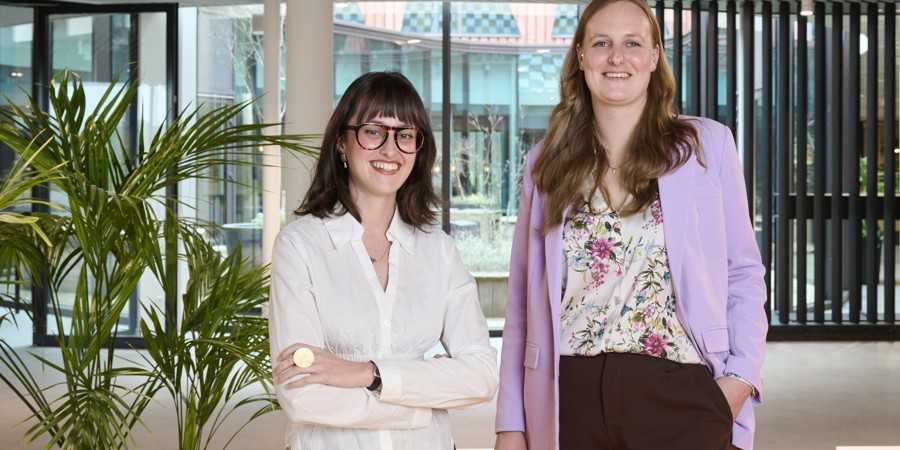
CBS plays a key role in the EMOS programme. ‘We organise the second year of the Master's programme. It all happens in our offices here at CBS,’ Daalmans says. CBS staff teach them about all areas and aspects of the statistical process in the first semester. Methodology, production systems and legal aspects are all covered. ‘For the second semester, students take part in an internship in our methodology department and work on their Master's research under the supervision of a CBS staff member. This is part of the methodology research programme.’
New courses
Hands-on courses are an important component of the EMOS programme. This year, two new courses have been added that incorporate the latest developments in official statistics. The first focuses on innovation and covers themes like artificial intelligence, synthetic data, new European legislation and the use of data to address challenges such as sustainability and inequality. The students work in teams on a research project that combines a literature review with interviews – both inside and outside CBS. This helps them to understand how innovative techniques are applied in practice and where the opportunities lie.The second course adopts a more technical angle and focuses on the processes inovlved in production systems. It covers metadata, data quality and rules-based data processing, for instance. The students work in pairs to build a small-scale statistical production system of their own, based on a standard architecture and using synthetic data. Both courses conclude with presentations and a group discussion.
A breath of fresh air
CBS benefits from working with the EMOS students. ‘They bring a fresh perspective and new energy,’ says Daalmans. ‘And their research work and projects provide a space for innovative research that would otherwise be left undone. Innovative research adds real value for CBS, and will help us to continue making statistics into the future.’What do the students think?
Eulàlia Gómez-Aguiló and Reza van Welie are two of the 11 EMOS students currently working at CBS. During the new course on innovation, their team looked at the question of whether statistics could play a role in helping to curb food waste, and spoke to the Dutch Association of Food Banks, for instance. Their conclusion: data could certainly be useful, provided it is used and shared in the right way. Both students have been working on research for their Master's thesis for several months now. Gómez is focusing on robustness in epidemic modelling, while Van Welie is researching machine learning.The students are both very positive about their time at CBS. Van Welie: ‘You quickly get to know a lot of people because you’re working with a group of other students. At the same time, it’s easy to connect with other colleagues too. People want to know what you’re doing and they enjoy sharing their experiences with us.’ Gómez agrees: ‘It’s a dynamic working environment, and people here share the same passion. That makes it an inspiring place to work.’
A unique opportunity
Van Welie chose EMOS after previously studying Animal Sciences at Wageningen University. The opportunity to do an internship at CBS was a significant factor in her choice. ‘CBS is a leading knowledge institute. Even my grandparents know CBS, although they’re not quite sure exactly what I’m working on here,' she says, laughing.Gómez was following a Bachelor's degree in biomedical sciences at the University of Barcelona before she decided to move to the Netherlands especially to enrol in the EMOS programme. The opportunity to see the process of making official statistics close-up was what caught her eye. ‘I’m really committed to collecting high-quality data and ensuring the resulting information is accessible to all. People often find data complicated and think that certain knowledge is only for experts,’ Gómez explains. ‘But everybody has a right to knowledge about their own country and the people around them. I’m happy to be contributing to that.’
The students are not sure about their future yet. Van Welie is considering a combination of data research and project management, and organised this year’s EMOS symposium, where students present their research. Gómez must first decide where she will enter the labour market – Spain or France, where she also has friends and family. But she’ll decide that later. ‘First I have to finish writing my thesis,’ she explains, laughing.
Related items
- Website - Eurostat CROS - EMOS dashboard - Master in Official Statistics