More nitrogen, phosphorus and heavy metals discharged in treated water
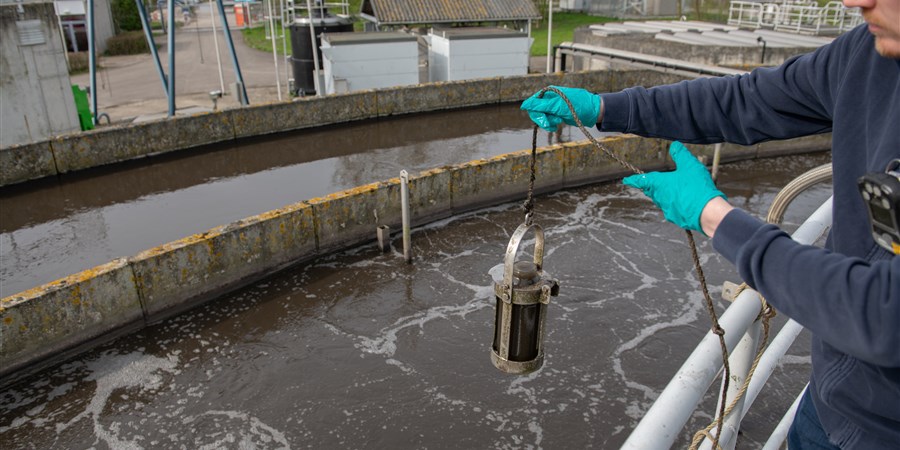
- Sewage treatment plants discharged more nitrogen compounds, phosphorus and heavy metals such as zinc and nickel into surface water in 2023 and 2024.
- Nearly a quarter of surface water pollution from heavy metals, such as zinc and chromium, comes from treated water released from sewage treatment plants.
- Agriculture and run-off from agricultural land are the largest sources of surface water pollution when it comes to nitrogen, phosphorus, chromium and nickel.
The quantity of pollutants discharged from sewage treatment plants into surface water has risen over the last two years, having previously fallen for many years. In 2024, 5 percent more nitrogen was discharged from sewage treatment plants than in 2019. Less phosphorus was discharged than in 2019 (3 percent lower), but the quantity of phosphorus discharged has also risen in recent years. More heavy metals were also discharged than in 2019, especially zinc and nickel. Discharges of nitrogen compounds, phosphates and heavy metals remain lower than they were in 2000, however. This is according to figures from Statistics Netherlands (CBS) and the Netherlands Pollutant Release and Transfer Register.
| Jaartal | Nitrogen compounds, input (2000=100) | Nitrogen compounds, residual discharge (2000=100) | Phosphorus compounds, input (2000=100) | Phosphorus compounds, residual discharge (2000=100) |
|---|---|---|---|---|
| 2000 | 100.0 | 100.0 | 100.0 | 100.0 |
| 2001 | 101.1 | 102.6 | 104.1 | 105.3 |
| 2002 | 101.5 | 95.8 | 107.0 | 105.5 |
| 2003 | 98.8 | 81.6 | 106.0 | 98.8 |
| 2004 | 99.4 | 81.1 | 107.7 | 96.6 |
| 2005 | 100.1 | 75.1 | 108.5 | 93.2 |
| 2006 | 101.3 | 65.8 | 107.8 | 91.2 |
| 2007 | 103.6 | 61.7 | 112.5 | 92.9 |
| 2008 | 105.4 | 58.1 | 112.4 | 89.7 |
| 2009 | 102.3 | 52.4 | 109.8 | 80.9 |
| 2010 | 103.7 | 57.3 | 104.4 | 78.2 |
| 2011 | 105.4 | 52.7 | 104.1 | 74.7 |
| 2012 | 105.1 | 52.5 | 101.2 | 72.6 |
| 2013 | 103.5 | 50.6 | 100.4 | 73.1 |
| 2014 | 105.8 | 48.7 | 101.7 | 76.6 |
| 2015 | 105.2 | 50.6 | 100.7 | 68.9 |
| 2016 | 109.7 | 49.7 | 100.8 | 62.2 |
| 2017 | 110.2 | 51.4 | 101.0 | 64.8 |
| 2018 | 111.1 | 48.4 | 100.1 | 58.9 |
| 2019 | 111.2 | 49.7 | 101.9 | 62.1 |
| 2020 | 110.6 | 49.5 | 100.0 | 57.8 |
| 2021 | 110.4 | 49.7 | 98.6 | 59.1 |
| 2022 | 109.1 | 44.8 | 97.3 | 56.6 |
| 2023 | 109.7 | 52.4 | 95.9 | 62.3 |
| 2024 | 112.2 | 52.2 | 97.4 | 60.2 |
Sewage treatment plants do not remove 100 percent of pollution from sewage. Treated water containing residual pollutants and contaminants is discharged into surface water such as ditches, rivers and lakes. Discharges from sewage treatment plants are one of the main sources of water pollution from nitrogen, phosphorus and heavy metals.
Discharge of nitrogen and phosphorus up over past two years due to higher volume of sewage water
In 2024, 15.1 million kilograms of nitrogen compounds were released in residual discharges, 5 percent higher than in 2019. For phosphorus, residual discharges were down by 3 percent compared to 2019 at 1.7 million kilograms, but the level was higher than in the period 2020-22. The high values recorded in 2023 and 2024 may have been caused in part by the relatively high volume of sewage water treated due to higher precipitation levels. Compared to the year 2000, however, the quantity of nitrogen discharged was almost 50 percent lower due to improvements in water treatment techniques. The quantity of phosphorus discharged was 40 percent lower than it was in 2000.
In 2024, an average of 84 percent of nitrogen and 87 percent of phosphorus was removed from the sewage water treated. In 2000, it was only possible to remove 66 percent and 79 percent, respectively. This improvement has been driven in part by technical improvements made on the basis of European regulations. Nitrogen and phosphorus compounds in surface water lead to a build-up of nutrients, which can lead to eutrophication (the excessive growth of algae).
Residual discharges of heavy metals
When it comes to heavy metals - zinc, nickel and copper - the quantities discharged in treated water are higher than they were five years ago. For zinc, the volume discharged in 2024 was 82.7 thousand kilograms - 11 percent more than in 2019. For nickel, the volume was 4 percent higher at 7.6 thousand kilograms. For copper, the volume was 2 percent higher at 9.4 thousand kilograms. These increases were probably also due to the relatively high volume of sewage water treated. The discharge of chromium was lower than in 2019 (-10 percent).
The quantity of heavy metals discharged was lower in 2024 than in 2000. Discharges of copper and chromium fell by about half during that period. Discharges of nickel were nearly 40 percent lower, and discharges of zinc were 18 percent lower.
The reduction in heavy metals discharged has mainly been a result of a fall in the quantity of heavy metals in the sewage water treated. This, in turn, is chiefly due to remediation measures taken by industry and, to a lesser extent, the use of alternative materials for gutters and street furniture.
| Jaartal | Zinc (2000=100) | Nickel (2000=100) | Copper (2000=100) | Chromium (2000=100) |
|---|---|---|---|---|
| 2000 | 100 | 100 | 100 | 100 |
| 2001 | 103.4 | 103.4 | 110.8 | 92.6 |
| 2002 | 97.5 | 77.5 | 100.3 | 75.1 |
| 2003 | 74.7 | 68.8 | 87.2 | 62.5 |
| 2004 | 85.7 | 77.6 | 71.5 | 56.0 |
| 2005 | 84.3 | 80.3 | 68.6 | 69.0 |
| 2006 | 75.0 | 75.1 | 53.7 | 59.4 |
| 2007 | 83.0 | 79.4 | 59.5 | 65.9 |
| 2008 | 77.2 | 72.7 | 52.1 | 44.7 |
| 2009 | 77.9 | 70.5 | 56.0 | 48.7 |
| 2010 | 84.6 | 77.8 | 49.5 | 57.5 |
| 2011 | 77.3 | 78.2 | 44.3 | 47.4 |
| 2012 | 94.3 | 66.6 | 53.9 | 45.9 |
| 2013 | 86.2 | 71.0 | 57.3 | 49.7 |
| 2014 | 72.4 | 62.7 | 45.6 | 43.9 |
| 2015 | 79.5 | 63.9 | 50.6 | 44.4 |
| 2016 | 76.9 | 73.6 | 47.0 | 47.4 |
| 2017 | 80.7 | 70.2 | 51.8 | 45.4 |
| 2018 | 65.5 | 66.0 | 47.2 | 48.9 |
| 2019 | 73.7 | 60.4 | 51.7 | 51.7 |
| 2020 | 68.4 | 59.3 | 51.3 | 37.0 |
| 2021 | 70.2 | 62.0 | 55.5 | 44.1 |
| 2022 | 68.6 | 61.1 | 49.8 | 43.7 |
| 2023 | 79.2 | 66.5 | 52.2 | 49.2 |
| 2024 | 81.9 | 63.0 | 52.6 | 46.4 |
Treated sewage water is a major source of pollutants in surface water
In 2024, residual discharges from sewage treatment plants accounted for 15 percent of total nitrogen pollution in surface water and 19 percent of phosphorus pollution. Heavy metals, meanwhile, accounted for 23 percent of zinc, 22 percent of chromium, 21 percent of nickel and 8 percent of copper in surface water.
Agriculture and run-off from agricultural land are the largest sources of water pollution from nitrogen and phosphorus
Agriculture and run-off from agricultural land are the largest source of nitrogen pollution (49 percent), phosphorus pollution (56 percent) and pollution from heavy metals such as chromium (38 percent) and nickel (48 percent).
For zinc (56 percent) and copper (26 percent), emissions from traffic and transportation are the largest source, such as particulates from tyres and vehicle brake disks, or pollution from shipping.
Other important sources are deposition from the air and surface water pollution from nature and soil. Some pollutants also come from the sewerage system itself, from rain water drains and storm overflow drains. Overflow drains are emergency outlets in the sewerage system that enable it to cope with sudden downpours, but result in the direct discharge of sewage water into surface water.
| Categorie | Agriculture & agricultural run-off (%) | Nature & natural run-off (%) | Treatment of sewage water (%) | Atmospheric deposition (%) | Transport & traffic (%) | Sewerage system (%) | Industry (%) | Other sources (%) |
|---|---|---|---|---|---|---|---|---|
| Nitrogen | 50523.64 | 17879.53 | 15127.09 | 15002.48 | 49.07 | 2436.12 | 1571.60 | 461.37 |
| Phosphorus | 5059.60 | 1697.67 | 1713.37 | 0.00 | 7.37 | 408.91 | 126.55 | 60.45 |
| Nickel | 17.76 | 4.52 | 7.59 | 2.59 | 0.77 | 2.40 | 0.89 | 0.42 |
| Chromium | 4.13 | 1.17 | 2.34 | 0.70 | 0.14 | 1.76 | 0.40 | 0.14 |
| Zinc | 46.52 | 16.87 | 82.68 | 32.35 | 92.73 | 58.14 | 3.94 | 24.90 |
| Copper | 11.51 | 2.71 | 9.38 | 5.59 | 62.73 | 11.36 | 8.22 | 0.23 |
| Source: CBS, Netherlands Pollutant Release and Transfer Register | ||||||||
High volume of sewage water treated in 2024 due to high rainfall
At the end of 2024, there were 313 sewage treatment plants in the Netherlands, the same number as in the previous year. These plants are operated by 21 water boards. Sewage treatment plants remove almost all biodegradable pollutants from the waste water treated.
In 2024, 2.23 billion cubic metres of sewage water was treated, the second highest volume ever measured, and only 0.7 percent less than the record year of 2023. Both 2024 and 2023 saw relatively high precipitation. Sewage water is a combination of wastewater from households and businesses, and rainwater.