Inflation at 2.7 percent in March
Statistics Netherlands (CBS) reports that consumer goods and services in the Netherlands were 2.7 percent more expensive in March 2026 than they were in March 2025. Inflation in the month of February 2026 was 2.4 percent, year on year. The inflation rate for March is the same as the flash estimate published on 31 March.
Inflation is measured each month as the increase in the consumer price index (CPI) relative to one year previously. The CPI not only provides an insight into year-on-year price changes (inflation), but also month-on-month changes. Prices for consumers rose by 0.7 percent in March relative to February.
| year | month | Inflation (year-on-year % change of the CPI) |
|---|---|---|
| 2021 | January | 1.6 |
| 2021 | February | 1.8 |
| 2021 | March | 1.9 |
| 2021 | April | 1.9 |
| 2021 | May | 2.1 |
| 2021 | June | 2.0 |
| 2021 | July | 1.4 |
| 2021 | August | 2.4 |
| 2021 | September | 2.7 |
| 2021 | October | 3.4 |
| 2021 | November | 5.2 |
| 2021 | December | 5.7 |
| 2022 | January | 6.4 |
| 2022 | February | 6.2 |
| 2022 | March | 9.7 |
| 2022 | April | 9.6 |
| 2022 | May | 8.8 |
| 2022 | June | 8.6 |
| 2022 | July | 10.3 |
| 2022 | August | 12.0 |
| 2022 | September | 14.5 |
| 2022 | October | 14.3 |
| 2022 | November | 9.9 |
| 2022 | December | 9.6 |
| 2023 | January | 7.6 |
| 2023 | February | 8.0 |
| 2023 | March | 4.4 |
| 2023 | April | 5.2 |
| 2023 | May | 6.1 |
| 2023 | June | 5.7 |
| 2023 | July | 4.6 |
| 2023 | August | 3.0 |
| 2023 | September | 0.2 |
| 2023 | October | -0.4 |
| 2023 | November | 1.6 |
| 2023 | December | 1.2 |
| 2024 | January | 3.2 |
| 2024 | February | 2.8 |
| 2024 | March | 3.1 |
| 2024 | April | 2.7 |
| 2024 | May | 2.7 |
| 2024 | June | 3.2 |
| 2024 | July | 3.7 |
| 2024 | August | 3.6 |
| 2024 | September | 3.5 |
| 2024 | October | 3.5 |
| 2024 | November | 4.0 |
| 2024 | December | 4.1 |
| 2025 | January | 3.3 |
| 2025 | February | 3.8 |
| 2025 | March | 3.7 |
| 2025 | April | 4.1 |
| 2025 | May | 3.3 |
| 2025 | June | 3.1 |
| 2025 | July | 2.9 |
| 2025 | August | 2.8 |
| 2025 | September | 3.3 |
| 2025 | October | 3.1 |
| 2025 | November | 2.9 |
| 2025 | December | 2.8 |
| 2026 | January | 2.4 |
| 2026 | February | 2.4 |
| 2026 | March | 2.7 |
Prices for motor fuel higher
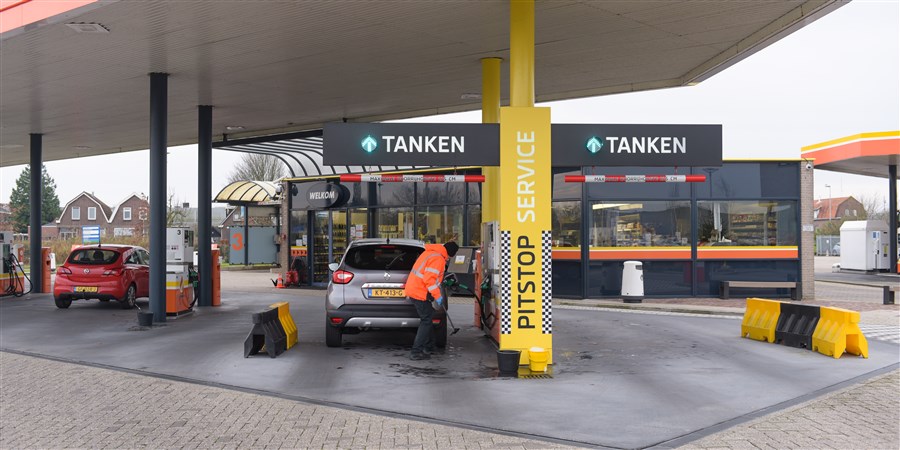
The higher price of motor fuel contributed to the rise in inflation. In March 2026, motor fuels (petrol, diesel and LPG) were 18.7 percent more expensive than they were in March 2025. In February, the year-on-year price increase was 2.6 percent. The price of diesel rose by the most. In February 2026, the average price for a litre of diesel was 1.834 euros; in March, it was 2.294 euros. A litre of petrol cost 2.039 euros in February; in March, this was 2.249 euros. The price of food also had an upward effect on inflation last month.
| Month | 2026 (2025=100) | 2025 (2025=100) |
|---|---|---|
| Jan | 103.94 | 102.43 |
| Feb | 105.32 | 102.66 |
| Mar | 117.98 | 99.39 |
| Apr | 98.35 | |
| May | 97.15 | |
| Jun | 98.86 | |
| Jul | 98.89 | |
| Aug | 99.07 | |
| Sep | 100.86 | |
| Oct | 100.72 | |
| Nov | 102.07 | |
| Dec | 99.56 |
| March 2026 (percentage point) | February 2026 (percentage point) | |
|---|---|---|
| Total | 2.7 | 2.4 |
| Housing and utilities | 0.85 | 0.87 |
| Transport | 0.59 | 0.35 |
| Restaurants and accommodation services | 0.34 | 0.35 |
| Food and non-alcoholic beverages | 0.23 | 0.14 |
| Miscellaneous goods and services | 0.22 | 0.22 |
| Insurance and financial services | 0.15 | 0.15 |
| Recreation, sport and culture | 0.15 | 0.16 |
Price changes in the short term
Compared to February, consumer prices rose by 0 .7 percent in March. The average monthly change in inflation in March over the past ten years was also 0.7 percent. It is worth noting that when making comparisons with the previous month, seasonal factors must be taken into account. For example, clothing is less expensive during sales than in other periods. Prices are temporarily lower then, but this is not a structural price decrease.
| year | month | Consumer price index (CPI) (2025=100) |
|---|---|---|
| 2024 | J | 94.52 |
| 2024 | F | 95.14 |
| 2024 | M | 95.61 |
| 2024 | A | 96.23 |
| 2024 | M | 96.44 |
| 2024 | J | 96.60 |
| 2024 | J | 98.02 |
| 2024 | A | 98.33 |
| 2024 | S | 97.86 |
| 2024 | O | 98.34 |
| 2024 | N | 97.77 |
| 2024 | D | 97.88 |
| 2025 | J | 97.60 |
| 2025 | F | 98.67 |
| 2025 | M | 99.09 |
| 2025 | A | 100.10 |
| 2025 | M | 99.53 |
| 2025 | J | 99.49 |
| 2025 | J | 100.87 |
| 2025 | A | 101.06 |
| 2025 | S | 100.97 |
| 2025 | O | 101.37 |
| 2025 | N | 100.51 |
| 2025 | D | 100.73 |
| 2026 | J | 99.99 |
| 2026 | F | 101.02 |
| 2026 | M | 101.75 |
Euro area inflation also up
CBS publishes two different inflation rates: one is based on the Consumer Price Index (CPI) and the other is based on the European Harmonised Index of Consumer Prices (HICP). According to the HICP, consumer goods and services in the Netherlands were 2.6 percent more expensive in March, year on year. In February, inflation was 2.3 percent according to the HICP. Inflation in the euro area as a whole rose from 1.9 percent in February to 2.5 percent in March.
| year | month | The Netherlands (year-on-year % change of the HICP) | Euro area (year-on-year % change of the HICP) |
|---|---|---|---|
| 2021 | January | 1.6 | 0.9 |
| 2021 | February | 1.9 | 0.9 |
| 2021 | March | 1.9 | 1.3 |
| 2021 | April | 1.7 | 1.6 |
| 2021 | May | 2.0 | 2.0 |
| 2021 | June | 1.7 | 1.9 |
| 2021 | July | 1.4 | 2.2 |
| 2021 | August | 2.7 | 3.0 |
| 2021 | September | 3.0 | 3.4 |
| 2021 | October | 3.7 | 4.1 |
| 2021 | November | 5.9 | 4.9 |
| 2021 | December | 6.4 | 5.0 |
| 2022 | January | 7.6 | 5.1 |
| 2022 | February | 7.3 | 5.9 |
| 2022 | March | 11.7 | 7.4 |
| 2022 | April | 11.2 | 7.4 |
| 2022 | May | 10.2 | 8.1 |
| 2022 | June | 9.9 | 8.6 |
| 2022 | July | 11.6 | 8.9 |
| 2022 | August | 13.7 | 9.1 |
| 2022 | September | 17.1 | 9.9 |
| 2022 | October | 16.8 | 10.6 |
| 2022 | November | 11.3 | 10.1 |
| 2022 | December | 11.0 | 9.2 |
| 2023 | January | 8.4 | 8.6 |
| 2023 | February | 8.9 | 8.5 |
| 2023 | March | 4.5 | 6.9 |
| 2023 | April | 5.8 | 7.0 |
| 2023 | May | 6.8 | 6.1 |
| 2023 | June | 6.4 | 5.5 |
| 2023 | July | 5.3 | 5.3 |
| 2023 | August | 3.4 | 5.2 |
| 2023 | September | -0.3 | 4.3 |
| 2023 | October | -1.0 | 2.9 |
| 2023 | November | 1.4 | 2.4 |
| 2023 | December | 1.0 | 2.9 |
| 2024 | January | 3.1 | 2.8 |
| 2024 | February | 2.7 | 2.6 |
| 2024 | March | 3.1 | 2.4 |
| 2024 | April | 2.6 | 2.4 |
| 2024 | May | 2.7 | 2.6 |
| 2024 | June | 3.4 | 2.5 |
| 2024 | July | 3.5 | 2.6 |
| 2024 | August | 3.3 | 2.2 |
| 2024 | September | 3.3 | 1.7 |
| 2024 | October | 3.3 | 2.0 |
| 2024 | November | 3.8 | 2.2 |
| 2024 | December | 3.9 | 2.4 |
| 2025 | January | 3.0 | 2.5 |
| 2025 | February | 3.5 | 2.3 |
| 2025 | March | 3.4 | 2.2 |
| 2025 | April | 4.1 | 2.2 |
| 2025 | May | 2.9 | 1.9 |
| 2025 | June | 2.7 | 2.0 |
| 2025 | July | 2.6 | 2.0 |
| 2025 | August | 2.4 | 2.0 |
| 2025 | September | 3.0 | 2.2 |
| 2025 | October | 3.0 | 2.1 |
| 2025 | November | 2.6 | 2.1 |
| 2025 | December | 2.7 | 2.0 |
| 2026 | January | 2.2 | 1.7 |
| 2026 | February | 2.3 | 1.9 |
| 2026 | March | 2.6 | 2.5 |
Inflation in the euro area as a whole was virtually the same as in the Netherlands in March 2026. Energy prices in the Netherlands rose faster than in the euro area, year on year. The year-on-year price increase for food, beverages, tobacco was lower in the Netherlands than the euro area average.
| The Netherlands (%) | Euro area (%) | |
|---|---|---|
| All items | 2.6 | 2.5 |
| Food, beverages and tobacco | 1.9 | 2.4 |
| Energy including motor fuels | 6.6 | 4.9 |
| Non-energy industrial goods | 0.4 | 0.5 |
| Services | 3.5 | 3.2 |
Difference between CPI and HICP
In order to facilitate comparison between countries, EU member states calculate a consumer price index according to internationally agreed definitions and methods. The European Central Bank (ECB) uses the HICP to formulate its monetary policies for the euro area. Most countries also produce their own national consumer price index.
For the Netherlands, the main difference between the CPI and the HICP is that the HICP does not take account of costs related to home ownership while the CPI does. In the Dutch CPI, these costs are calculated based on changes to rental property prices. These differences are explained in greater detail in the article Differences between consumer price figures.
New base year for CPI figures with effect from 2026
With effect from 2026, the Consumer Price Index (CPI) and the European Harmonised Index of Consumer Prices (HICP) have switched to a new base year, from 2015=100 to 2025=100. The inflation figures for January 2026 are the first in which this new base year has been applied.
More information
The dashboard on consumer prices shows inflation according to the CPI and the HICP. In addition, the dashboard provides more detailed information on price changes for a number of consumer goods and services. The personal inflation calculator allows people to get a better understanding of how price changes affect them.
Sources
- StatLine - Annual rate of change CPI; since 1963
- StatLine - Consumer price index 2025=100
- StatLine - Harmonised index of consumer prices
Related items
- Visualisation - Dashboard on consumer prices
- Longread - Consumer price index from 2026
- Background - Differences between consumer price figures
- Dossier - Business cycle