Inflation increases to 3.3 percent in September
Inflation is measured each month as the increase in the consumer price index (CPI) relative to one year previously. The CPI not only provides an insight into price changes relative to one year previously (inflation) but also changes relative to the previous month. Prices for consumers fell by 0.1 percent in September relative to August.
| year | month | Inflation (year-on-year % change of the CPI) |
|---|---|---|
| 2020 | January | 1.8 |
| 2020 | February | 1.6 |
| 2020 | March | 1.4 |
| 2020 | April | 1.2 |
| 2020 | May | 1.2 |
| 2020 | June | 1.6 |
| 2020 | July | 1.7 |
| 2020 | August | 0.7 |
| 2020 | September | 1.1 |
| 2020 | October | 1.2 |
| 2020 | November | 0.8 |
| 2020 | December | 1.0 |
| 2021 | January | 1.6 |
| 2021 | February | 1.8 |
| 2021 | March | 1.9 |
| 2021 | April | 1.9 |
| 2021 | May | 2.1 |
| 2021 | June | 2.0 |
| 2021 | July | 1.4 |
| 2021 | August | 2.4 |
| 2021 | September | 2.7 |
| 2021 | October | 3.4 |
| 2021 | November | 5.2 |
| 2021 | December | 5.7 |
| 2022 | January | 6.4 |
| 2022 | February | 6.2 |
| 2022 | March | 9.7 |
| 2022 | April | 9.6 |
| 2022 | May | 8.8 |
| 2022 | June | 8.6 |
| 2022 | July | 10.3 |
| 2022 | August | 12.0 |
| 2022 | September | 14.5 |
| 2022 | October | 14.3 |
| 2022 | November | 9.9 |
| 2022 | December | 9.6 |
| 2023 | January | 7.6 |
| 2023 | February | 8.0 |
| 2023 | March | 4.4 |
| 2023 | April | 5.2 |
| 2023 | May | 6.1 |
| 2023 | June | 5.7 |
| 2023 | July | 4.6 |
| 2023 | August | 3.0 |
| 2023 | September | 0.2 |
| 2023 | October | -0.4 |
| 2023 | November | 1.6 |
| 2023 | December | 1.2 |
| 2024 | January | 3.2 |
| 2024 | February | 2.8 |
| 2024 | March | 3.1 |
| 2024 | April | 2.7 |
| 2024 | May | 2.7 |
| 2024 | June | 3.2 |
| 2024 | July | 3.7 |
| 2024 | August | 3.6 |
| 2024 | September | 3.5 |
| 2024 | October | 3.5 |
| 2024 | November | 4.0 |
| 2024 | December | 4.1 |
| 2025 | January | 3.3 |
| 2025 | February | 3.8 |
| 2025 | March | 3.7 |
| 2025 | April | 4.1 |
| 2025 | May | 3.3 |
| 2025 | June | 3.1 |
| 2025 | July | 2.9 |
| 2025 | August | 2.8 |
| 2025 | September | 3.3 |
Upward effect of motor fuels and bungalow park accommodation
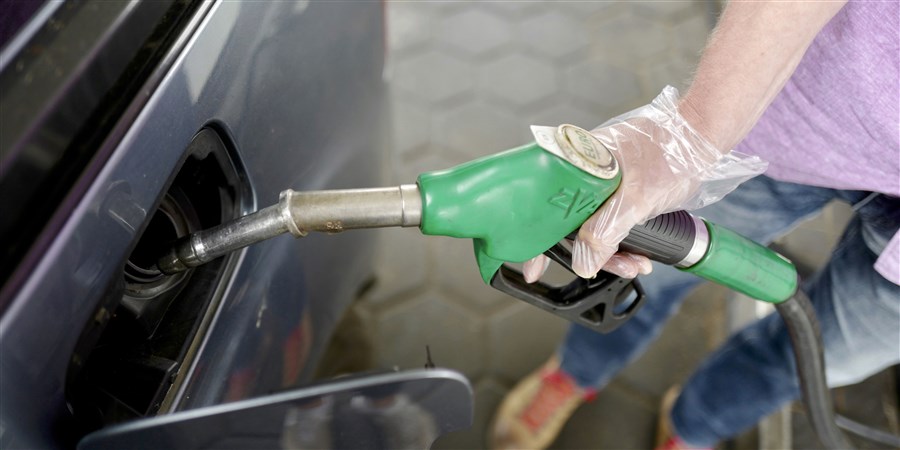
The price changes for motor fuels contributed to the increase in inflation. In September 2025, motor fuels were 3.6 percent more expensive than in September 2024, while in August 2025, motor fuels were 2.0 percent cheaper than a year earlier. Price changes of bungalow park accommodation also had an upward effect on the inflation rate.
| Month | 2025 (2015=100) | 2024 (2015=100) |
|---|---|---|
| Jan | 132.20 | 129.07 |
| Feb | 132.50 | 133.18 |
| Mar | 128.28 | 135.20 |
| Apr | 126.94 | 139.31 |
| May | 125.39 | 135.57 |
| Jun | 127.60 | 133.08 |
| Jul | 127.64 | 133.76 |
| Aug | 127.86 | 130.48 |
| Sep | 130.18 | 125.62 |
| Oct | 127.48 | |
| Nov | 130.98 | |
| Dec | 131.10 |
| September 2025 (percentage point) | August 2025 (percentage point) | |
|---|---|---|
| All items | 3.3 | 2.8 |
| Housing, water and energy | 1.11 | 1.10 |
| Food and non-alcoholic beverages | 0.50 | 0.50 |
| Miscellaneous goods and services | 0.42 | 0.44 |
| Restaurants and hotels | 0.37 | 0.03 |
| Transport | 0.25 | 0.14 |
| Recreation and culture | 0.22 | 0.29 |
| Clothing and footwear | 0.14 | 0.10 |
| Furnishing and household equipment | 0.13 | 0.05 |
Price changes in the short term
The CPI not only provides an insight into price changes relative to one year previously (inflation) but also compared to the previous month. Consumer prices fell by 0.1 percent in September relative to August.
It is worth noting that when making comparisons with the previous month, seasonal factors must be taken into account. For example, airline tickets are more expensive during holiday months than in months outside the holiday season. Prices are temporarily higher then, but this is not a structural price increase. Due to these seasonal influences, month-on-month changes are often more volatile than year-on-year changes.
| year | month | Consumer price index (CPI) (2015=100) |
|---|---|---|
| 2023 | J | 123.21 |
| 2023 | F | 124.45 |
| 2023 | M | 124.72 |
| 2023 | A | 126.01 |
| 2023 | M | 126.26 |
| 2023 | J | 125.83 |
| 2023 | J | 127.13 |
| 2023 | A | 127.70 |
| 2023 | S | 127.16 |
| 2023 | O | 127.73 |
| 2023 | N | 126.40 |
| 2023 | D | 126.45 |
| 2024 | J | 127.11 |
| 2024 | F | 127.95 |
| 2024 | M | 128.58 |
| 2024 | A | 129.42 |
| 2024 | M | 129.69 |
| 2024 | J | 129.91 |
| 2024 | J | 131.82 |
| 2024 | A | 132.24 |
| 2024 | S | 131.61 |
| 2024 | O | 132.26 |
| 2024 | N | 131.48 |
| 2024 | D | 131.63 |
| 2025 | J | 131.35 |
| 2025 | F | 132.80 |
| 2025 | M | 133.33 |
| 2025 | A | 134.72 |
| 2025 | M | 134.00 |
| 2025 | J | 133.96 |
| 2025 | J | 135.69 |
| 2025 | A | 135.99 |
| 2025 | S | 135.92 |
Euro area inflation rises
CBS publishes two different inflation rates: one is based on the Consumer Price Index (CPI) and the other is based on the European Harmonised Index of Consumer Prices (HICP). According to the HICP, consumer goods and services in the Netherlands were 3.0 percent more expensive in September than they were one year previously. In August, inflation was 2.4 percent according to the HICP. Inflation in the euro area rose from 2.0 percent in August to 2.2 percent in September.
| year | month | The Netherlands (year-on-year % change of the HICP) | Euro area (year-on-year % change of the HICP) |
|---|---|---|---|
| 2020 | January | 1.7 | 1.4 |
| 2020 | February | 1.3 | 1.2 |
| 2020 | March | 1.1 | 0.7 |
| 2020 | April | 1.0 | 0.3 |
| 2020 | May | 1.1 | 0.1 |
| 2020 | June | 1.7 | 0.3 |
| 2020 | July | 1.6 | 0.4 |
| 2020 | August | 0.3 | -0.2 |
| 2020 | September | 1.0 | -0.3 |
| 2020 | October | 1.2 | -0.3 |
| 2020 | November | 0.7 | -0.3 |
| 2020 | December | 0.9 | -0.3 |
| 2021 | January | 1.6 | 0.9 |
| 2021 | February | 1.9 | 0.9 |
| 2021 | March | 1.9 | 1.3 |
| 2021 | April | 1.7 | 1.6 |
| 2021 | May | 2.0 | 2.0 |
| 2021 | June | 1.7 | 1.9 |
| 2021 | July | 1.4 | 2.2 |
| 2021 | August | 2.7 | 3.0 |
| 2021 | September | 3.0 | 3.4 |
| 2021 | October | 3.7 | 4.1 |
| 2021 | November | 5.9 | 4.9 |
| 2021 | December | 6.4 | 5.0 |
| 2022 | January | 7.6 | 5.1 |
| 2022 | February | 7.3 | 5.9 |
| 2022 | March | 11.7 | 7.4 |
| 2022 | April | 11.2 | 7.4 |
| 2022 | May | 10.2 | 8.1 |
| 2022 | June | 9.9 | 8.6 |
| 2022 | July | 11.6 | 8.9 |
| 2022 | August | 13.7 | 9.1 |
| 2022 | September | 17.1 | 9.9 |
| 2022 | October | 16.8 | 10.6 |
| 2022 | November | 11.3 | 10.1 |
| 2022 | December | 11.0 | 9.2 |
| 2023 | January | 8.4 | 8.6 |
| 2023 | February | 8.9 | 8.5 |
| 2023 | March | 4.5 | 6.9 |
| 2023 | April | 5.8 | 7.0 |
| 2023 | May | 6.8 | 6.1 |
| 2023 | June | 6.4 | 5.5 |
| 2023 | July | 5.3 | 5.3 |
| 2023 | August | 3.4 | 5.2 |
| 2023 | September | -0.3 | 4.3 |
| 2023 | October | -1.0 | 2.9 |
| 2023 | November | 1.4 | 2.4 |
| 2023 | December | 1.0 | 2.9 |
| 2024 | January | 3.1 | 2.8 |
| 2024 | February | 2.7 | 2.6 |
| 2024 | March | 3.1 | 2.4 |
| 2024 | April | 2.6 | 2.4 |
| 2024 | May | 2.7 | 2.6 |
| 2024 | June | 3.4 | 2.5 |
| 2024 | July | 3.5 | 2.6 |
| 2024 | August | 3.3 | 2.2 |
| 2024 | September | 3.3 | 1.7 |
| 2024 | October | 3.3 | 2.0 |
| 2024 | November | 3.8 | 2.2 |
| 2024 | December | 3.9 | 2.4 |
| 2025 | January | 3.0 | 2.5 |
| 2025 | February | 3.5 | 2.3 |
| 2025 | March | 3.4 | 2.2 |
| 2025 | April | 4.1 | 2.2 |
| 2025 | May | 2.9 | 1.9 |
| 2025 | June | 2.8 | 2.0 |
| 2025 | July | 2.5 | 2.0 |
| 2025 | August | 2.4 | 2.0 |
| 2025 | September | 3.0 | 2.2 |
In particular, energy prices in the euro area were lower in September, whereas they were higher in the Netherlands, year on year. Furthermore, the year-on-year price increase for food, beverages and tobacco was higher in the Netherlands than the euro area average.
| The Netherlands (%) | Euro area (%) | |
|---|---|---|
| All items | 3.0 | 2.2 |
| Non-energy industrial goods | 1.5 | 0.8 |
| Energy including motor fuels | 4.0 | -0.4 |
| Food, beverages and tobacco | 3.7 | 3.0 |
| Services | 3.6 | 3.2 |
Difference between CPI and HICP
In order to facilitate comparison between countries, EU member states calculate a consumer price index according to internationally agreed definitions and methods. The European Central Bank (ECB) uses the HICP to formulate its monetary policies for the euro area. Most countries also produce their own national consumer price index.
For the Netherlands, the main difference between the CPI and the HICP is that the HICP does not take account of costs related to home ownership while the CPI does. In the Dutch CPI, these costs are calculated based on changes to rental property prices. These differences are explained in greater detail in the article Differences between consumer price figures.
New base year for CPI figures with effect from 2026
With effect from 2026, the Consumer Price Index (CPI) and the European Harmonised Index of Consumer Prices (HICP) will move to a new base year, from 2015=100 to 2025=100. An update to the classification of goods and services will also come into use in 2026, in order to reflect current consumption patterns better. The CPI will also be brought more into line with the HICP from 2026 onwards. It is worth noting that these changes will not affect inflation figures that have already been published. The first figures based on the new series with the reference year 2025 will be published in early February 2026.
Sources
- StatLine - Consumer prices; price index 2015=100
- StatLine - HICP; The Netherlands, Euro area and Europe, 2015=100
Related items
- Visualisation - Dashboard on consumer prices
- Longread - Consumer price index from 2026
- Background - Differences between consumer price figures
- Dossier - Business cycle