‘Baby penalty’ for women has got smaller
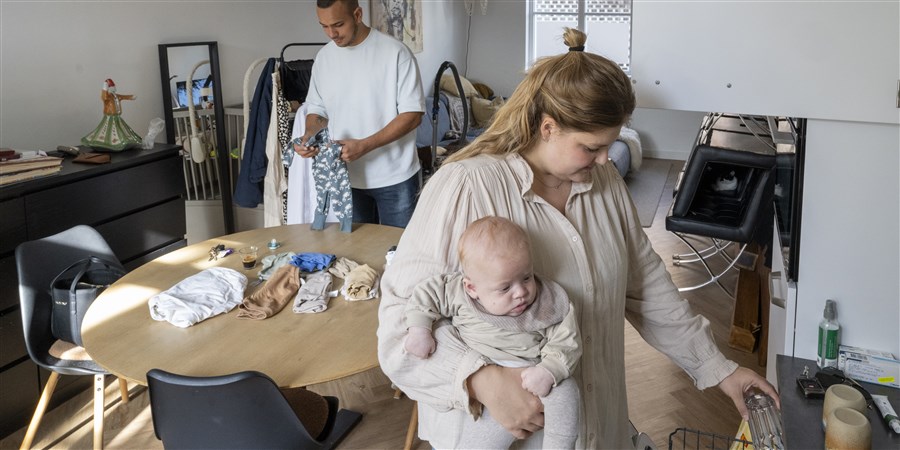
Women in employment who had their first child between 2016 and 2018 earned 33 percent less six years after the birth than they did in the year before they became mothers. For fathers, this ‘baby penalty’ is significantly lower, at 3 percent. For mothers, however, the penalty has decreased over time: women who had their first child twenty years ago saw their income from work fall by as much as 57 percent. In the intervening years, mothers have started working more hours, on average. This is reported by Statistics Netherlands in the Emancipation Monitor 2026, published today.
| Geslacht | 1996-2001 (% change compared with 1 year before the birth) | 2002-2007 (% change compared with 1 year before the birth) | 2008-2010 (% change compared with 1 year before the birth) | 2011-2013 (% change compared with 1 year before the birth) | 2014-2016 (% change compared with 1 year before the birth) | 2016-2018 (% change compared with 1 year before the birth) |
|---|---|---|---|---|---|---|
| Women | -57.4 | -49.0 | -43.0 | -37.2 | -35.0 | -32.8 |
| Men | 1.6 | -0.7 | -1.5 | -1.6 | 0.5 | -3.1 |
Preference for equal sharing of childcare, but the reality is different
Two-thirds of both women and men in heterosexual relationships with a child under 18 said they would like to share childcare equally. Between 25 percent and 30 percent believe that childcare should fall somewhat more, or primarily, to the mother. Very few respondents (2 percent) said that the father should take on more childcare.
In practice, childcare is shared equally far less often than desired: partners share childcare duties equally in 40 percent of heterosexual households with children. Over half say that the mother should take on most of the childcare.
| Verdeling | Mainly the father (%) | Men slightly more than women (%) | Equal share (%) | Women slightly more than men (%) | Mainly the mother (%) | Don’t know or no answer (%) |
|---|---|---|---|---|---|---|
| Preferred - mothers | 0.6 | 1.9 | 64.1 | 25.8 | 2.8 | 4.8 |
| Preferred - fathers | 0.0 | 2.3 | 66.9 | 22.7 | 3.8 | 4.3 |
| Actual | 0.3 | 3.7 | 40.1 | 47.8 | 7.4 | 0.7 |
| 1)in cohabiting male-female couples with a minor child living at home | ||||||
More men than women believe that mothers are better suited to childcare than fathers
Most people believe that men and women are equally suited to looking after children. However, 55 percent of men said this compared to 67 percent of women. 41 percent of men believe that women are better suited to looking after children, while 29 percent of women share this view. Very few respondents (either men nor women) indicated that men are better suited to childcare than women.Fathers with young children work more hours than most people think is suitable
26 percent of women and 30 percent of men believe that mothers with a child aged under 4 are best-off in a small part-time job of up to 20 hours a week. In practice, however, only 9 percent of mothers with a young child worked part-time in 2025. Most mothers worked 20 to 35 hours per week, and this is also the option preferred by the majority of both women and men. More mothers work full-time or do not work at all than most people think is suitable.
There is also a difference among men: the majority believe that fathers with a young child are best-off working between 20 and 35 hours. Women are 67 percent more likely to agree with this than men (57 percent). In practice, only 20 percent of fathers do so, while the majority (75 percent) work full-time.
| Arbeidsduur per week | No paid work (%) | 1 to 19 hours per week (%) | 20 to 34 hours per week (%) | 35 hours per week or more (%) |
|---|---|---|---|---|
| Most suitable¹⁾ for mothers | ||||
| According to women | 9.7 | 25.6 | 58.4 | 6.3 |
| According to men | 9.9 | 29.9 | 49.5 | 10.7 |
| Most suitable¹⁾ for fathers | ||||
| According to women | 1.9 | 9.6 | 67.3 | 21.2 |
| According to men | 2.3 | 10.4 | 56.8 | 30.6 |
| Working hours in practice | ||||
| Mothers | 15.9 | 8.9 | 57.0 | 18.1 |
| Fathers | 3.9 | 1.5 | 20.0 | 74.5 |
| 1)according to people aged 16 and over | ||||
1)
As far as the Emancipation Monitor is concerned, the focus remains on differences and similarities between women and men in many areas. In addition to work and care, it covers income and economic independence, the demographic life course, as well as education, health and safety.
Sources
- Publication - Emancipation monitor (summary in English)