Exports account for over half of economic growth
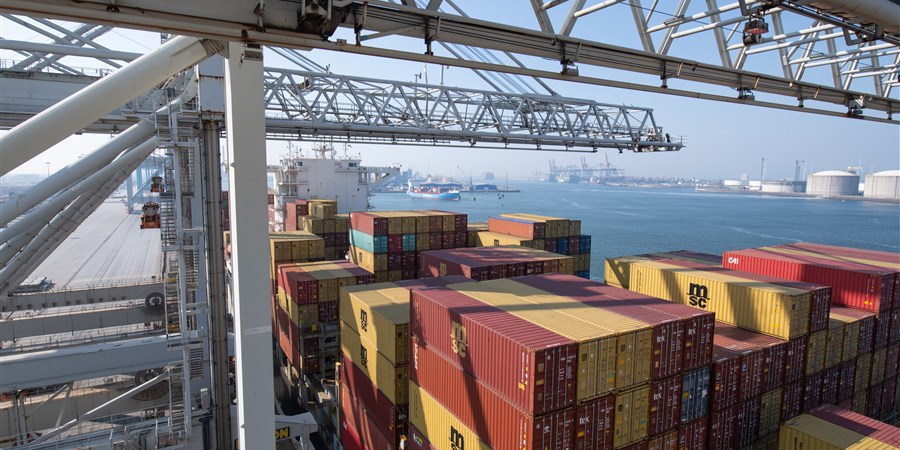
- The economy grew by 1.6 percent in 2025, with exports of goods and services contributing 0.9 percentage points of that.
- Exports of machinery, food, and agricultural products produced in the Netherlands were up, in particular.
- Government expenditure also made a contribution to economic growth, while investment and consumption contributed less.
The Netherlands’ gross domestic product (GDP) grew by 1.6 percent in 2025. Exports of goods and services accounted for 0.9 percentage points of that growth, while domestic spending (consumption and investment) accounted for the remaining 0.7 percentage points. Statistics Netherlands (CBS) reports this on the basis of newly released provisional figures.
Exports of goods and services contributed positively to economic growth for the second consecutive year in 2025. In 2023, the economy contracted due to a decline in exports, even though domestic spending grew slightly in that year.
The respective contributions to growth have been corrected for price changes and for the imports required (directly or indirectly) for consumption, investment, and exports. Only value added generated in the Netherlands is counted as contributing to the Dutch economy.
| Jaar | Gross domestic product (percentage points) | Domestic spending (percentage points) | Exports of goods and services (percentage points) |
|---|---|---|---|
| 2011 | 1.77 | 0.06 | 1.72 |
| 2012 | -0.98 | -1.82 | 0.84 |
| 2013 | -0.03 | -1.39 | 1.36 |
| 2014 | 1.61 | -0.09 | 1.70 |
| 2015 | 2.12 | -0.08 | 2.20 |
| 2016 | 2.42 | 2.34 | 0.09 |
| 2017 | 2.78 | 1.07 | 1.72 |
| 2018 | 2.26 | 1.34 | 0.92 |
| 2019 | 2.30 | 1.29 | 1.01 |
| 2020 | -3.87 | -1.79 | -2.08 |
| 2021 | 6.28 | 2.98 | 3.30 |
| 2022 | 5.01 | 2.72 | 2.29 |
| 2023 | -0.60 | 0.26 | -0.85 |
| 2024 | 1.07 | 0.48 | 0.59 |
| 2025* | 1.56 | 0.70 | 0.86 |
| * provisional figures | |||
Larger contribution from domestic exports
The fact that exports made a positive contribution to economic growth in 2025 was mainly due to domestic goods exports (i.e. exports of goods manufactured in the Netherlands). These contributed 0.5 percentage points to GDP growth. Exports of machinery, food, and agricultural products manufactured in the Netherlands were up, in particular.
Services exports contributed 0.3 percentage points to GDP growth, while goods re-exports contributed 0.1 percentage points. Re-exports are goods that were originally imported but then exported again after undergoing little or no processing in the Netherlands. Re-exports generate far less economic benefit per euro than domestic exports of goods and services.
In 2025, there was a shift in importance from services exports to domestic goods exports. In most years in the recent past, the economic contribution of exports was based primarily on service exports (except during the COVID-19 pandemic).
| Jaar | Total exports (percentage points) | Domestic exports (percentage points) | Re-exports (percentage points) | Services exports (percentage points) |
|---|---|---|---|---|
| 2011 | 1.72 | 0.71 | 0.34 | 0.67 |
| 2012 | 0.84 | 0.31 | 0.17 | 0.36 |
| 2013 | 1.36 | 0.43 | 0.24 | 0.69 |
| 2014 | 1.70 | 0.26 | 0.20 | 1.24 |
| 2015 | 2.20 | -0.34 | 0.45 | 2.09 |
| 2016 | 0.09 | 0.54 | 0.23 | -0.69 |
| 2017 | 1.72 | 0.67 | 0.32 | 0.73 |
| 2018 | 0.92 | 0.17 | 0.07 | 0.68 |
| 2019 | 1.01 | -0.03 | 0.08 | 0.95 |
| 2020 | -2.08 | -0.29 | -0.38 | -1.40 |
| 2021 | 3.30 | 1.63 | 0.62 | 1.05 |
| 2022 | 2.29 | -0.16 | -0.08 | 2.52 |
| 2023 | -0.85 | -0.96 | -0.16 | 0.27 |
| 2024 | 0.59 | 0.12 | 0.10 | 0.38 |
| 2025* | 0.86 | 0.48 | 0.11 | 0.27 |
| * provisional figures | ||||
Government spending accounts for the lion’s share of national expenditure
Spending contributed 0.7 percentage points to economic growth in 2025. Most of that spending was made up of government expenditure. Household consumption and investment, including inventories, also made a positive contribution, but it was smaller. A relevant factor in this is that a larger share of household consumption and investment consists of imports, which do not contribute to the GDP of the Netherlands.
| Jaar | Total domestic spending (percentage points) | Household spending (percentage points) | Government spending (percentage points) | Investment (including inventories) (percentage points) |
|---|---|---|---|---|
| 2011 | 0.06 | 0.06 | -0.07 | 0.07 |
| 2012 | -1.82 | -0.41 | -0.34 | -1.07 |
| 2013 | -1.39 | -0.37 | -0.12 | -0.90 |
| 2014 | -0.09 | -0.21 | 0.08 | 0.05 |
| 2015 | -0.08 | 0.21 | -0.21 | -0.08 |
| 2016 | 2.34 | 0.23 | 0.23 | 1.88 |
| 2017 | 1.07 | 0.19 | 0.22 | 0.66 |
| 2018 | 1.34 | 0.77 | 0.28 | 0.29 |
| 2019 | 1.30 | 0.22 | 0.56 | 0.51 |
| 2020 | -1.79 | -1.56 | 0.13 | -0.36 |
| 2021 | 2.98 | 1.18 | 1.01 | 0.79 |
| 2022 | 2.72 | 1.86 | 0.45 | 0.41 |
| 2023 | 0.26 | 0.01 | 0.53 | -0.28 |
| 2024 | 0.48 | -0.12 | 0.66 | -0.07 |
| 2025* | 0.70 | 0.16 | 0.46 | 0.08 |
| * provisional figures | ||||