More coal and containers transported over inland waterways
Almost 333 million tonnes of cargo was transported by inland vessels over the Netherlands’ inland waterways in 2025. That was almost the same volume as in 2024. However, there are differences in the types of goods transported. For example, the transport of coal, containers, (raw) metals and metal products increased, while the transport of liquid bulk cargo, iron ore, sand and gravel declined. This is according to new figures released by Statistics Netherlands (CBS).
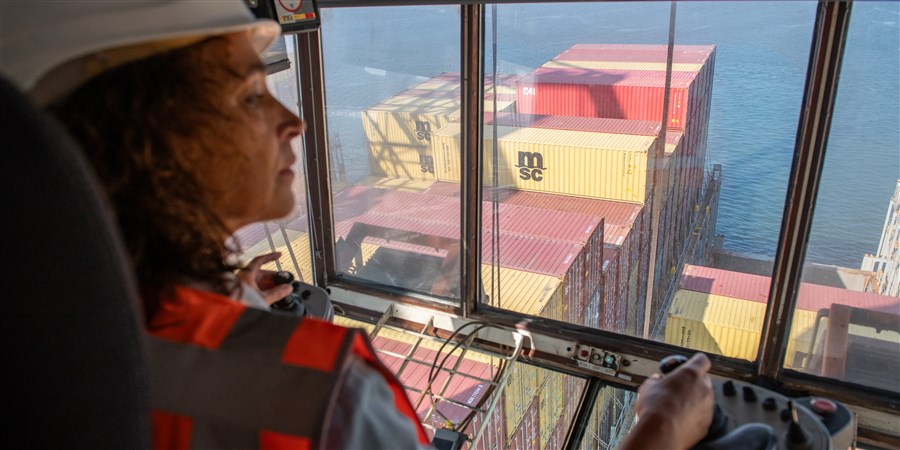
Container transport in the Netherlands rose by 2.1 percent to nearly 42 million tonnes in 2025. The total number of containers (in TEU, the standard size for containers) rose by 5.0 percent. In particular, the transport of empty containers increased: up by 8.6 percent on 2024. For loaded containers, the increase was 3.3 percent. Dry bulk cargo, such as coal, also saw an increase. Meanwhile, the transport of liquid bulk cargo, such as methanol, diesel and petrol declined.
| Jaar | Total (x million tonnes) | Dry bulk cargo (x million tonnes) | Liquid bulk cargo (x million tonnes) | Containers (x million tonnes) |
|---|---|---|---|---|
| 2012 | 343.0 | 200.4 | 103.6 | 39.0 |
| 2013 | 348.4 | 203.4 | 105.2 | 39.9 |
| 2014 | 357.7 | 210.9 | 104.3 | 42.5 |
| 2015 | 349.7 | 201.7 | 106.3 | 41.7 |
| 2016 | 354.6 | 198.7 | 111.4 | 44.5 |
| 2017 | 359.4 | 199.9 | 112.1 | 47.3 |
| 2018 | 349.5 | 194.7 | 109.5 | 45.3 |
| 2019 | 347.7 | 178.9 | 120.7 | 48.1 |
| 2020 | 335.9 | 170.2 | 116.2 | 49.4 |
| 2021 | 357.6 | 183.9 | 123.2 | 50.5 |
| 2022 | 345.5 | 180.2 | 119.7 | 45.6 |
| 2023 | 327.5 | 167.9 | 120.0 | 39.6 |
| 2024 | 332.4 | 168.7 | 122.7 | 41.0 |
| 2025 | 332.8 | 170.5 | 120.5 | 41.8 |
More imports and exports
Cross-border goods transport over inland waterways increased by 1.4 percent to 179 million tonnes in 2025. Both imports and exports of goods increased.
The volume of goods imported into the Netherlands rose to 64 million tonnes. This was mainly because more goods were transported from France to the Netherlands (+12.2 percent). For example, more corn was imported from France (nearly 2.5 times as much as in 2024).
The volume of cargo exported from the Netherlands over inland waterways rose by over 114 million tonnes. The total weight of cargo transported to Germany (+2.6 percent) and Belgium (+1.6 percent) increased, in particular. More petroleum products and coal were transported to Germany, while more sand, gravel and petroleum products were transported to Belgium. Over 95 percent of total outbound cargo was unloaded in Germany and Belgium.
Domestic transport fell by 0.5 percent to over 111 million tonnes. That was mainly due to a decrease in the transportation of sand and gravel (-4.4 percent) and grains (-15.4 percent), among other goods.
Transit trade also declined. Nearly 42 million tonnes of goods in transit were transported over the Netherlands’ inland waterways, 3.5 percent less than in 2024. The decrease was mainly seen in chemical products and petroleum products.
| Stroom | year-on-year & change ( year-on-year % change) |
|---|---|
| Domestic transport | -0.5 |
| Imports | 0.7 |
| Exports | 1.8 |
| Transit trade | -3.5 |
More dry bulk cargo transported, less liquid bulk cargo
The transport of dry bulk cargo increased to over 170 million tonnes in 2025. This was mainly because more coal was transported: up by 11.9 percent on 2024. Less electricity was produced using wind power, and the relatively low price of coal resulted in longer hours of operation at coal-fired power stations in the Netherlands and Germany. Despite the increase, coal transport has fallen over a longer period: by more than a third compared with 2015.
In addition to coal, the transport of goods in containers, raw metals and metal products (such as steel coils) and building materials (such as cement) also increased.
The volume of iron ore transported fell to 19 million tonnes - the lowest since 2012, with the exception of 2020, the year of the coronavirus pandemic. The largest share (nearly 90 percent) by far of iron ore transported over the Netherlands’ inland waterways went to Germany. The volume of cargo transported to Germany fell by 9.2 percent to almost 17 million tonnes. Iron ore is primarily used for the production of steel. However, demand for steel was low, and the European steel industry’s competitive position remained under pressure due to high energy prices and cheaper imports from Asia and elsewhere.
Unlike dry bulk cargo, the weight of liquid bulk cargo transported fell by 1.8 percent to over 120 million tonnes. The volume of both chemical products and refined petroleum products declined. Liquid chemical products transported totalled 48.5 million tonnes and refined petroleum products totalled 63 million tonnes.
| Goederensoort | 2025 (x million tonnes) | 2024 (x million tonnes) |
|---|---|---|
| Metal ores, other mining and quarrying products | 82.7 | 86.0 |
| Coking coal, refined petroleum products | 65.8 | 66.3 |
| Chemical products, synthetic or artificial fibres | 57.7 | 58.6 |
| Containers | 41.8 | 41.0 |
| Coal, lignite, crude oil, natural gas | 20.4 | 18.2 |
| Food, beverages and tobacco | 18.6 | 18.1 |
Sources
Related items
- News release - More goods transported over inland waterways in 2024