Greenhouse gas emissions down in the first quarter of 2026
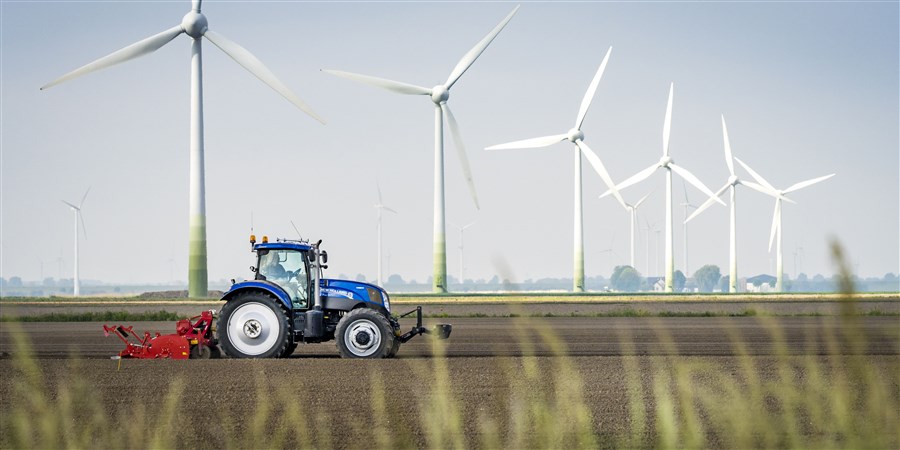
Greenhouse gas (GHG) emissions were over 5 percent lower in Q1 2026 than in Q1 2025. This is mainly because emissions from the electricity sector were 12.5 percent lower. Statistics Netherlands (CBS) and the National Institute for Public Health and the Environment (RIVM)/Emissions Register report this on the basis of provisional quarterly figures on GHG emissions, in accordance with the IPCC guidelines.
| CO2 (megatonnes of CO2-equivalent) | Other greenhouse gases (megatonnes of CO2-equivalent) | ||
|---|---|---|---|
| Totaal IPCC | 2026 | 35.6 | 6.6 |
| Totaal IPCC | 2025 | 37.9 | 6.7 |
| Manufacturing | 2026 | 10.1 | 1.2 |
| Manufacturing | 2025 | 10.6 | 1.3 |
| Electricity | 2026 | 8.9 | 0 |
| Electricity | 2025 | 10.2 | 0 |
| Buildings and construction | 2026 | 7.2 | 0.2 |
| Buildings and construction | 2025 | 7.4 | 0.2 |
| Agriculture | 2026 | 2.3 | 4.8 |
| Agriculture | 2025 | 2.3 | 4.8 |
| Mobility | 2026 | 6.4 | 0.2 |
| Mobility | 2025 | 6.7 | 0.2 |
| Land use | 2026 | 0.7 | 0.2 |
| Land use | 2025 | 0.7 | 0.2 |
| * provisional figures | |||
Emissions from electricity sector 12.5 percent lower
In Q1 2026, GHG emissions from the electricity sector were 12.5 percent lower, year on year. This is mainly because nearly a quarter less coal was consumed for electricity production. The sector produced more electricity, however, primarily due to an increase in wind power generation. There was more wind in Q1 2026 than in the same quarter of last year. The share of the electricity sector in total greenhouse gas emissions in Q1 2026 was 21 percent, compared with 23 percent in Q1 2025.
Emissions from manufacturing and mobility sectors were also lower
Emissions from the manufacturing and mobility sectors were also down in Q1 2026. The manufacturing sector emitted over 4 percent less than in the first quarter of 2025, primarily due to lower oil consumption. This was the result of lower output, particularly by the chemical industry. Manufacturing's contribution to total emissions was 27 percent, the same as last year.
The mobility sector emitted over 5 percent less in the first quarter of 2026. Less diesel was consumed, in particular, but also less petrol. Because the price of diesel in the Netherlands rose by more than it did in neighbouring countries, refuelling across the border became more attractive. According to IPCC regulations, emissions from fuels purchased abroad do not count towards the Netherlands' emissions figures. Furthermore, fewer diesel lease cars were sold, and these are driven more frequently than average. The mobility sector's contribution to total emissions was 15.5 percent in the first quarter, the same as in the first quarter of 2025.
| Categories | Share |
|---|---|
| Manufacturing | 26.9 |
| Electricity | 21.2 |
| Buildings and construction | 17.5 |
| Agriculture | 16.8 |
| Mobility | 15.5 |
| Land use | 2.2 |
CBS also calculates CO2 emissions from all domestic economic activities according to the national accounts. These include CO2 emissions from international air and sea transport and emissions from the combustion of biomass, unlike emissions calculated according to the IPCC definitions. In the news release below, CO2 emissions are described in accordance with the calculation method and terminology set out in the national accounts.
CO2 emissions from the Dutch economy 5 percent lower
The Dutch economy emitted 5 percent less CO2 in Q1 2026 than it did in Q1 2025, while gross domestic product (GDP) increased by 1.2 percent over the same period. Although the year started cold, February and March were relatively mild. As a result, Q1 2026 was less cold overall than Q1 2025. Adjusted for weather conditions, CO2 emissions decreased by nearly 4 percent.
The decrease in CO2 emissions was mainly due to lower usage of coal by power stations. As a result, the energy and water companies and waste management cluster emitted nearly 9 percent less CO2 than in Q1 2025. However, the added value (the difference between production and consumption of energy, materials, and services) of this cluster was over 2 percent higher.
The transport sector emitted the same volume of CO2 as in Q1 2025. Emissions from aviation and inland shipping were higher, while emissions from international maritime shipping and road transport were down. The added value of the transport sector contracted by more than 1 percent.
Households, the services sector, and manufacturing also emitted less CO2. For households, this was primarily due to lower natural gas consumption. However, the added value of the services sector was higher, year on year. In the agriculture, mining and quarrying, manufacturing and construction sectors, emissions decreased in the chemical industry, in particular. The added value of this cluster remained unchanged.
| Category | CO2-emissions (year-on-year volume change in %) | Value added (year-on-year volume change in %) | GDP (year-on-year volume change in %) |
|---|---|---|---|
| Total (weather adjusted) | -3.9 | ||
| Total | -5 | 1.2 | |
| Transport sector | 0 | -1.1 | |
| Households | -3.5 | ||
| Agriculture, mining, manufacturing and construction | -4.5 | 0 | |
| Other services | -5.5 | 1.9 | |
| Energy and water supply, waste management | -8.9 | 2.3 | |