Over 8 in 10 school students plan to leave the Caribbean Netherlands
| Categorie | Bonarie (% of young people who want to leave the island) | Saba (% of young people who want to leave the island) | St Eustatius (% of young people who want to leave the island) |
|---|---|---|---|
| To explore the world | 56.1 | 59.8 | 44.5 |
| For education or work | 53.0 | 60.8 | 64.5 |
| Does not enjoy life on the island | 26.5 | 29.7 | 23.5 |
| Family is living elsewhere | 15.2 | 18.6 | 10.5 |
| Grant for overseas education | 5.8 | 7.5 | |
| Health | 1.5 | 5.9 | |
| Other reason | 18.3 | 21.8 | 18.0 |
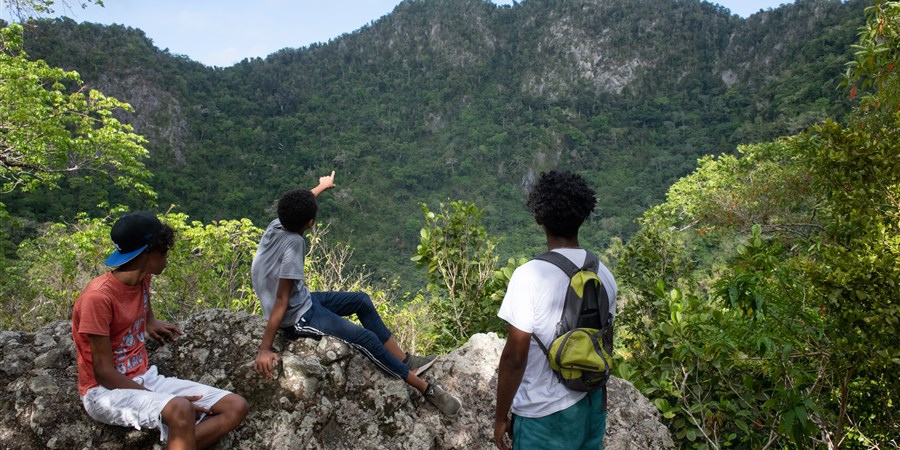
In 2024, 91 percent of students on Saba and St Eustatius aged under 18 in secondary (vocational) education said they want to leave the island and live elsewhere. On Bonaire, the share was 81 percent. A total of 56 percent of school students on Bonaire who plan to leave the island said they want to travel and explore other countries. On Saba, the share was nearly 60 percent and on St Eustatius it was 45 percent.
Over 40 percent of school students on Bonaire want to continue their education elsewhere
Among school students on Bonaire aged under 18 in secondary education, 42 percent want to continue their education, but this will mean leaving the island. Among students on Saba and St Eustatius, the percentage was 53 percent and 48 percent, respectively. The majority of the students who intend to remain on the islands want to find a job or start their own business. A minority indicate that they do not know yet.
Compared to 2020, students on Bonaire were more likely to indicate that they want to work or start their own business there. On Saba, students were slightly less likely than in 2020 to want to start their own business and were more likely not to have any future plans yet.
| Jaartal | To continue their education (% of young people in secondary education aged under 18) | For work (% of young people in secondary education aged under 18) | To start their own business (% of young people in secondary education aged under 18) | Other (% of young people in secondary education aged under 18) | Do not know yet (% of young people in secondary education aged under 18) |
|---|---|---|---|---|---|
| Bonaire | |||||
| 2024 | 42.3 | 18.5 | 15.8 | 8.5 | 14.9 |
| 2020 | 45.7 | 14.9 | 12.5 | 9.3 | 17.5 |
| Saba | |||||
| 2024 | 53.1 | 12.5 | 13.5 | 6.2 | 14.6 |
| 2020 | 48.4 | 16.1 | 20.4 | 5.4 | 9.7 |
| St Eustatius | |||||
| 2024 | 48.1 | 13.8 | 15.0 | 5.0 | 18.1 |
| 2020¹ | |||||
| 1)The response on St Eustatius in 2020 was low and therefore, the figures are not reliable enough to be published. | |||||
Most students say they receive good advice about their future plans
Making plans for the future and moving to another country are major decisions, and good advice can help young people to make the right choices. In 2024, 79 percent of students on Bonaire agreed with the statement ‘I have received good advice about making plans for my future’. The percentages for Saba and St Eustatius were almost the same. On all three islands, 5 percent or less disagreed with the statement.
| Agree, or completely agree (% of young people in secondary education aged under 18) | Do not agree, nor disagree (% of young people in secondary education aged under 18) | Disagree or completely disagree (% of young people in secondary education aged under 18) | |
|---|---|---|---|
| Bonaire | 78.7 | 15.9 | 5.4 |
| Saba | 76.0 | 18.8 | 5.2 |
| St Eustatius | 76.9 | 19.4 | 3.7 |
The number of young people is declining, particularly on Bonaire
The share of young people in the Caribbean Netherlands is on a general downward trend. In 2011, a quarter of Bonaire’s population was aged under 20, while in 2025 this was 21 percent. According to the latest population forecast, only 18 percent of the population will be aged under 20 in 2035.
On St Eustatius, the proportion of young people in the total population is declining less rapidly. In 2011, a quarter of the population was aged under 20, and this share is expected to be slightly lower in 2035 (23 percent).
On Saba, 21 percent of the population was aged under 20 in 2011. That is expected to be 17 percent in 2035.
| Categorie | 0-19 yrs (%) | 20-64 yrs (%) | 65 yrs or older (%) |
|---|---|---|---|
| Bonaire | |||
| Forecast 2035 | 18 | 63 | 19 |
| 2025 | 21 | 65 | 14 |
| 2018 | 23 | 65 | 12 |
| 2011 | 25 | 65 | 10 |
| St Eustatius | |||
| Forecast 2035 | 23 | 57 | 20 |
| 2025 | 23 | 62 | 15 |
| 2018 | 24 | 64 | 12 |
| 2011 | 25 | 67 | 9 |
| Saba | |||
| Forecast 2035 | 17 | 63 | 20 |
| 2025 | 19 | 66 | 15 |
| 2018 | 17 | 70 | 12 |
| 2011 | 21 | 69 | 10 |
Special publication for the fifteenth anniversary of the Caribbean Netherlands
The Caribbean Netherlands in Numbers is published every year and includes figures, photos, infographics and the stories behind them. It provides an overview of the latest developments in the Caribbean Netherlands, and this special edition focuses specifically on longer-term trends. What has changed on the islands since they became special municipalities of the Netherlands on 10 October 2010?
Sources
- Publication - The Caribbean Netherlands in Numbers 2025
- Survey results - Young people in the Caribbean Netherlands: Student survey results
- Background article - Population forecast, Caribbean Netherlands 2025-2050
- Dashboard - Population forecast Caribbean Netherlands