Nearly 1 in 6 workers have stressful jobs
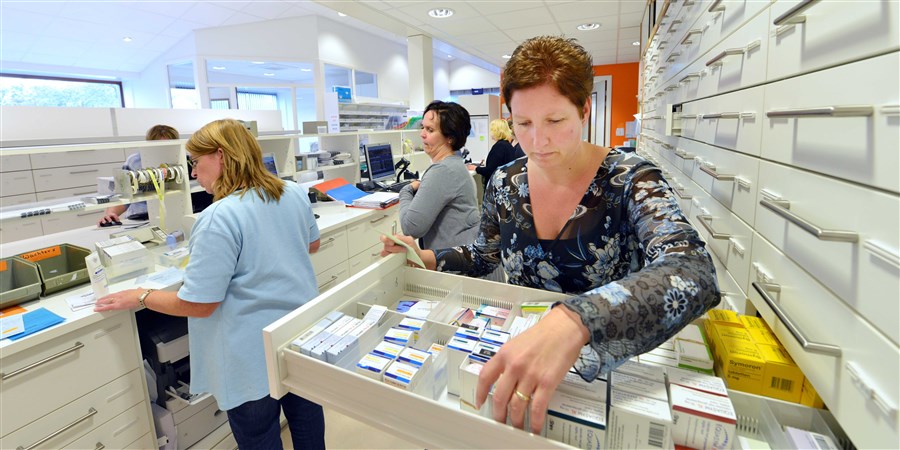
Half of pharmacy assistants have stressful jobs
Stressful jobs are most common in professions with a high level of responsibility and little control over their work. These jobs often require people to work largely according to fixed instructions or protocols. Pharmacy assistants have the most stressful job (51 percent), followed by primary school teachers and medical practice assistants (both 39 percent).Other employed persons with high levels of stress work in care, education and the accommodation and food services sector. Over the past five years, the number of people in stressful jobs has fallen slightly, from 18 percent to 16 percent, with little change in the type of jobs.
| Categorie | Stressful jobs (%) |
|---|---|
| Total | 15.6 |
| Pharmacy- assistants | 50.8 |
| Primary school teachers | 38.5 |
| Medical practice assistants | 38.5 |
| Doctors | 35.0 |
| Secondary school teachers of general subjects | 34.7 |
| Waiters and bar staff | 34.4 |
| Nurses (MBO) | 34.2 |
| Bakers | 31.4 |
| Specialised nurses | 30.2 |
| Chefs | 29.8 |
| Source: CBS, TNO | |
Stressful jobs associated with negative outlook on work
People in stressful jobs are more likely to be pessimistic about the future of their job than others, expecting it to become more mentally taxing (50 percent), more complex (39 percent), or less enjoyable (52 percent) over the next five years. Among all workers in 2024, these shares were 34 percent, 28 percent and 40 percent, respectively.
| Verwachtingen over vijf jaar | Total of workers (%) | People in stressful jobs (%) |
|---|---|---|
| Level of complexity | ||
| will increase | 27.9 | 39.3 |
| will decrease | 40.3 | 37.1 |
| Mental burden | ||
| wil increase | 34.0 | 50.1 |
| will decrease | 19.2 | 18.3 |
| Job satisfaction | ||
| will increase | 14.8 | 11.7 |
| will decrease | 39.6 | 52.4 |
| Source: CBS, TNO | ||
Almost half of workers perceive stress-relief measures as inadequate
People in stressful jobs are almost twice as likely to say that measures are needed to alleviate the pressures of work and the resulting stress. Almost half of them indicated that existing such measures are inadequate and 22 percent said there were no measures in place at all, compared to 28 percent and 10 percent across the whole workforce.| Categorei | Total of workers (%) | People in stressful jobs (%) |
|---|---|---|
| Not necessary, not relevant | 20.3 | 8.1 |
| Not necessary, adequate measures are in place | 41.8 | 22.9 |
| Necessary, measures taken are inadequate | 28.4 | 46.7 |
| Necessary, there are no measures in place | 9.5 | 22.2 |
| Source: CBS, TNO | ||
Absenteeism higher among workers with stressful jobs
Sick leave is more common among people in stressful jobs and it also lasts longer. Just over half (52 percent) of workers said they had taken time off due to illness in 2024. Among people with stressful jobs, the share was as high as 60 percent.Sources
- External link Method description - NEA 2025 (available in Dutch)