Almost a quarter more cars with an electric motor
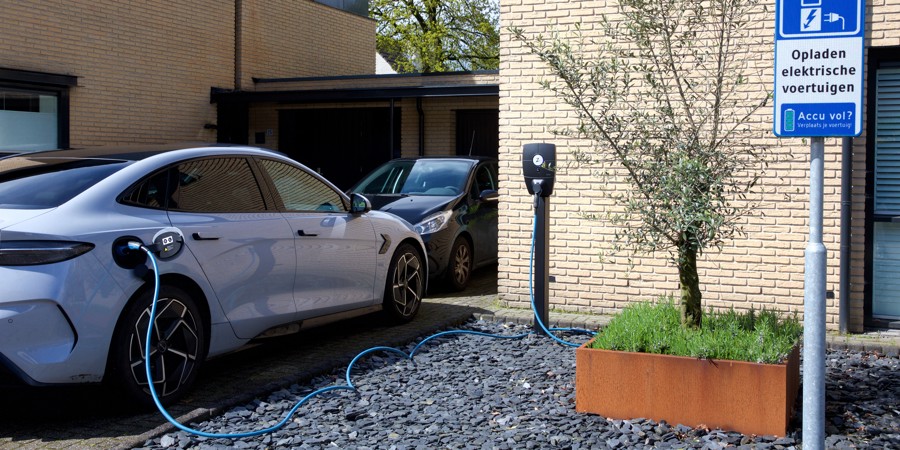
- There are over 2 million cars with an electric motor.
- One in five cars on the road in the Netherlands is now a fully electric, hybrid or plug-in hybrid vehicle.
- The number of plug-in hybrid vehicles has risen, in particular.
At the start of 2026, there were over 2 million fully electric, hybrid or plug-in hybrid vehicles in the Netherlands. That was nearly 6 percent more than in 2025. This means that over 1 in 5 passenger cars is now fully or partially electric. In particular, the number of plug-in hybrids has increased over the past year. This is according to the most recent figures from Statistics Netherlands (CBS).
In early 2026, there were 9.4 million passenger cars, almost 2 percent more than in 2025. This increase is entirely attributable to cars with an electric motor: fully electric vehicles (FEVs), hybrid electric vehicles (HEVs) or plug-in hybrids (PHEVs). Hybrid electric vehicles have an electric motor in addition to a combustion engine, but no plug to charge the battery, while plug-in hybrids have a combustion engine, an electric motor and a plug. The number of plug-in hybrid vehicles has grown the most (up by 40 percent). The number of cars with only a petrol or diesel motor is decreasing.
Of all cars with an electric motor, hybrid vehicles are the most common, totalling 800 thousand. At the start of 2026, the number of hybrid vehicles had increased by 19 percent, year on year. The number has almost quadrupled since 2019.
The number of fully electric passenger cars (FEVs) has increased by 22 percent over the past year. In early 2026, there were nearly 700 thousand FEVs. This has increased by a factor of fifteen over the past seven years.
| Brandstofsoort | Change (year-on-year % change) |
|---|---|
| Total | 1.8 |
| Plug-in hybrid | 39.5 |
| Fully electric | 22.0 |
| Hybrid | 19.0 |
| Petrol | -2.1 |
| LPG | -4.9 |
| Other | -7.9 |
| Diesel | -12.4 |
| Source: CBS, RDW | |
Almost all new cars have an electric motor
In 2018, just over 11 percent of all new passenger cars sold had an electric motor, compared with nearly 86 percent in 2025.
The share of cars running on petrol has declined from 75 percent in 2018 to 13 percent in 2025. Cars running on diesel have not been popular for a number of years, and only 1 percent of all new vehicles sold run on diesel.
Of all new cars with an electric motor sold, 46 percent are fully electric, 31 percent are hybrids, and the rest (23 percent) are plug-in hybrid electric vehicles.
| Brandstofsoort | Fully electric (% ) | Hybrid (% ) | Plug-in hybrid (% ) | Petrol (% ) | Diesel (% ) | Other (% ) |
|---|---|---|---|---|---|---|
| 2018 | 5.4 | 5.3 | 0.8 | 75.1 | 13.0 | 0.5 |
| 2024 | 34.3 | 28.1 | 14.1 | 21.9 | 1.0 | 0.6 |
| 2025 | 39.4 | 26.6 | 19.6 | 13.0 | 1.0 | 0.3 |
| Source: CBS, RDW | ||||||
Nearly 2 in 3 electric cars are owned by people aged 50 and over
In early 2026, 1.3 million cars with an electric motor were registered to private owners, 34 percent of which were owned by people aged 50 to 64 - the largest group.
Young people aged 18 to 29 are the least likely to own a vehicle with an electric motor, at 4 percent.
Hybrid vehicles are more popular among people aged 75 and over than among other age groups. Nearly 70 percent of people in this age group who opt for an electric vehicle, choose a hybrid vehicle. The majority of people aged 65 to 74 also opt for this type of car.
| Leeftijdsklasse | Total (% ) | Fully electric (% ) | Hybrid (% ) | Plug-in hybrid (% ) |
|---|---|---|---|---|
| 18-29 yrs | 4.2 | 3.6 | 4.0 | 5.1 |
| 30-39 yrs | 14.0 | 16.1 | 11.8 | 15.8 |
| 40-49 yrs | 17.4 | 21.5 | 13.8 | 19.8 |
| 50-64 yrs | 34.3 | 37.2 | 32.2 | 35.5 |
| 65-74 yrs | 19.9 | 15.9 | 23.3 | 17.5 |
| 75 yrs and over | 10.3 | 5.7 | 14.9 | 6.3 |