Spending on health and social care up by 8.9 percent in 2024
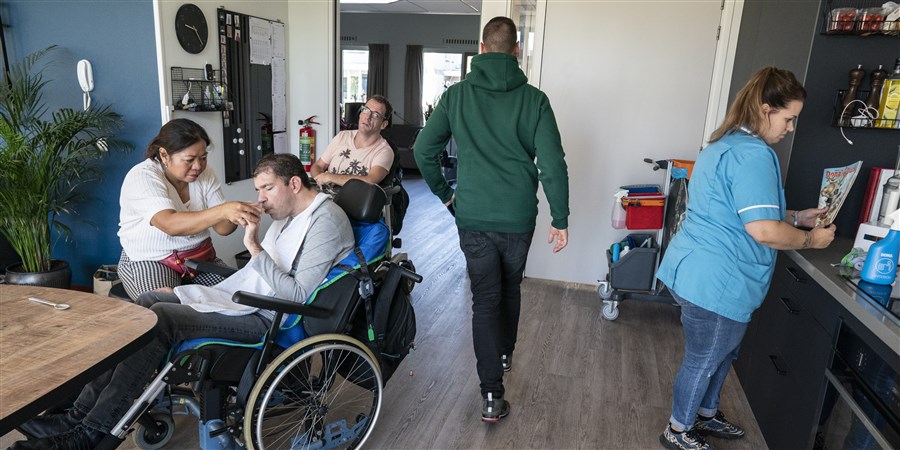
Spending on youth care, shelter and other social care increased by the most: from 23.6 billion in 2023 to 27.1 billion last year, an increase of 14.9 percent. This was due in part to higher costs for processing asylum-seekers (CAO centres) and rising spending on youth care and childcare.
| Zorgtype | Percentage change (year-on-year % change) |
|---|---|
| Social care, youth care and childcare | 14.9 |
| Mental health care | 10.1 |
| Nursing and care services | 9.6 |
| Care for people with disabilities | 8.9 |
| Specialist medical care | 7.6 |
| Primary care | 7.1 |
| Medicines and medical aids | 6.3 |
| Training, research, policy, and management | 6.0 |
| Other health care services | 4.8 |
The number of full-time jobs in the health and social care sector grew by 2 percent in Q4 2024, year on year. In youth care and social care, the increase was larger, at 6 percent and 7 percent, respectively. Higher spending is also largely due to higher charges for services in this sector. Prices in the health and social care sector rose by 6.4 percent in 2024.
Spending on health and social care rose by 654 euros per person
In total, the average spent per capita on health care in 2024 was 8,610 euros. This was 654 euros more than in 2023. These expenses are paid for by the government under the terms of the Long-Term Care Act (WLZ), the Health Insurance Act (ZVW), supplementary insurance, personal contributions, businesses and contributions from abroad (for example, care services paid to holidaymakers). Higher spending on youth care, shelter and other social care services pushed up the amount spent by the government on health and social care by 189 euros per head (up by 10.3 percent on 2023). Average expenditure under the Dutch Health Insurance Act (ZVW) rose by 215 euros (7.0 percent), and expenditure under the Long-term care Act (WLZ) rose by 174 euros (10.1 percent).When it comes to spending on nursing and care provided under the WLZ (particularly elderly care), home assistance is growing twice as fast as residential care (20.1 percent compared to 9.8 percent in 2024). Nevertheless, in absolute terms, spending on nursing and residential care remains about four times higher than spending on home assistance services.
| jaar | Government (euros per capita) | Long-term Care Act (Wlz) (euros per capita) | Health Insurance Act (Zvw) (euros per capita) | Additional insurance, personal contributions, businesses, other countries (euros per capita) |
|---|---|---|---|---|
| 2024 | 2020 | 1905 | 3286 | 1399 |
| 2023 | 1831 | 1731 | 3070 | 1324 |
Less pronounced increase in health care spending
The international definition of health care is narrower than the one used in the Netherlands. On the basis of the latest estimate, expenditure on health care rose by 7.9 percent in 2024. Statistics Netherlands published an article on this subject earlier this year, which is available via the link below.
The components of health and social care that are not included in the international figures increased by 11.9 percent in 2024, which was more than the components that are included. The components that are not included in the international definition of health care are social care work, childcare, large parts of youth care, social assistance and some long-term care.
| jaar | Health care spending, int'l. definition (billion euros) | Health care spending, outside the int'l. definition (billion euros) |
|---|---|---|
| 2024 | 113.4 | 41.5 |
| 2023 | 105.1 | 37.1 |
Sources
- StatLine - Health expenditure; providers and funding
- StatLine - Health expenditure; functions and providers
- StatLine – Health expenditure; functions and funding
- StatLine - Health expenditure: national and international figures compared; financing
- StatLine - Output and income components of GDP; activities, National Accounts
- OECD - A System of Health Accounts 2011