China is largest supplier of eight critical raw materials
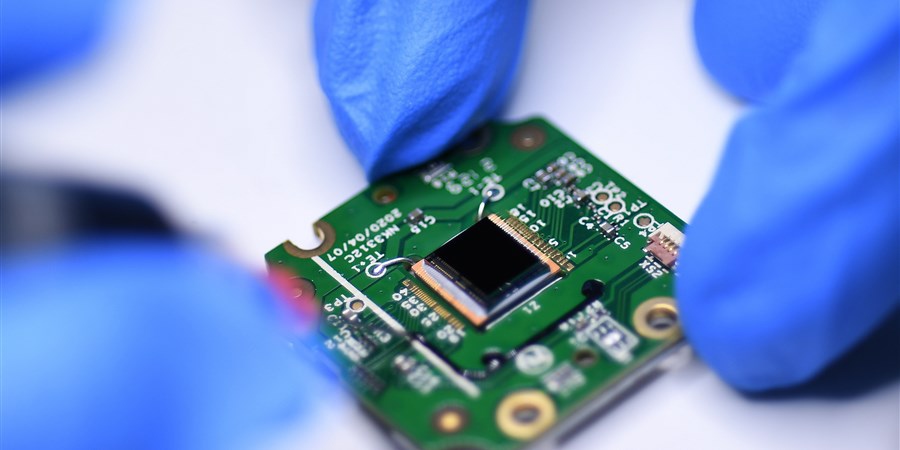
Critical raw materials are materials that are crucial for the EU in economic terms and also subject to a high risk of supply disruption. They are found in a range of products, and are essential for the energy transition (e.g. solar panels) and digitisation (e.g. semiconductors).
There are eight critical raw materials (barite, bismuth, cobalt, magnesium, manganese, strontium, tantalum and fluorspar) that the Netherlands imports mainly from China. This means that China supplies the Netherlands with more critical raw materials than any other country of origin. Germany ranks next, supplying six critical raw materials.
China is also an important producer of critical materials in global terms. It is the world's largest extractor of eleven critical raw materials, surpassing the US, South Africa, Türkiye and the Democratic Republic of Congo, all of which extract the most of two critical raw materials. In addition, China has the largest economically viable reserves of nine critical materials, followed by Australia with three. And finally, China is the world's largest processor of 19 critical raw materials.
| Kritieke materialen | China ranks in first place |
|---|---|
| Dutch imports | 8 |
| Global extraction | 11 |
| Global reserves | 9 |
| Global processing | 19 |
| Source: CBS, JRC, USGS and WMD | |
| 1)figure for global processing is an average for the period 2016-2020 | |
High-tech imports from China rely on critical raw materials
Critical raw materials also enter the Netherlands in manufactured products, such as laptops. China exports many such finished products, and is the largest supplier of products containing critical raw materials to the Netherlands. In 2024, the total value of such imported products was 58.4 billion euros. These were mainly high-tech products, such as laptops, tablets, solar panels, mobile telephones, routers, lithium-ion batteries, inverters and computer components.
Many of the products arriving from China are not destined for the Netherlands, but are re-exported to other European countries. But even so, China does have the largest share in the total metals footprint of Dutch consumption of any country in the world.
| Product met kritieke materialen | Regular imports (billion euros) | Quasi-transit (billion euros) |
|---|---|---|
| Laptops and tablets | 3.484 | 9.760 |
| Solar panels | 1.426 | 3.402 |
| Telephones and routers | 2.668 | 1.683 |
| Lithium-ion batteries | 1.536 | 1.609 |
| Static inverters | 1.203 | 1.454 |
| Computers and computer components | 1.092 | 1.153 |
| Source: CBS, based in part on TNO's Resources Scanner | ||
Magnesium is the most imported critical raw material
For imports of materials themselves (in the form of raw materials, processed raw materials or semi-finished products), the values involved are much lower because those figures only relate to the value of the materials themselves and not the value of the products that contain the materials.
Of all the critical raw materials imported from China, the Netherlands imported the most magnesium (274 million euros), followed by manganese (178 million euros) and aluminum (141 million euros).
| Kritieke materialen | Regular imports (mllion euros) | Quasi-transit (mllion euros) |
|---|---|---|
| Magnesium | 82.9 | 190.9 |
| Manganese | 84.8 | 93.5 |
| Aluminium | 82.0 | 58.9 |
| Copper | 43.2 | 19.5 |
| Titanium | 23.5 | 33.4 |
| Silicon | 26.6 | 28.5 |
| Cobalt | 37.2 | 15.1 |
| Coking coal | 13.2 | 38.4 |
| Nickel | 20.3 | 19.2 |
| Phosphorus | 28.3 | 5.7 |