Increase in trade with US in the first half of 2025
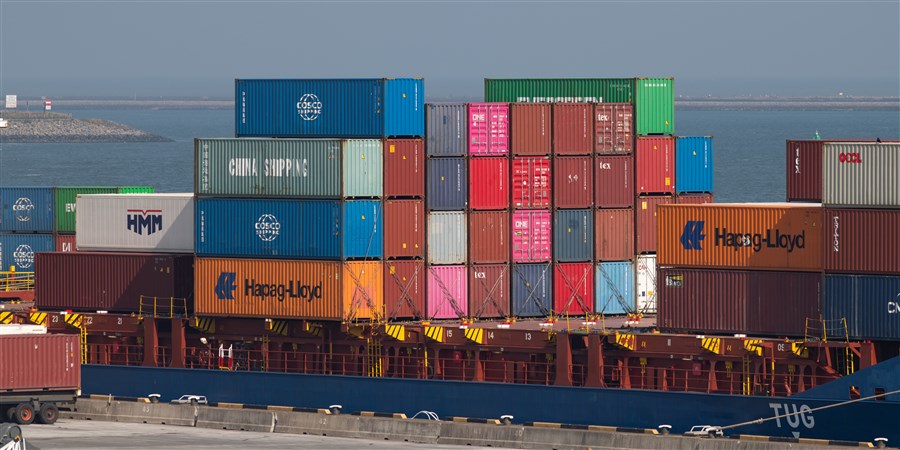
Even though trade between the Netherlands and the US faces challenges due to the import tariffs that have been announced and other factors, the trade relationship between the two countries grew in the first half of 2025. The increase in exports to the US was driven mainly by goods re-exports, which were up by 24.6 percent, compared to domestic exports (goods made in the Netherlands), which were up by 4.5 percent.
The increase in the value of exports to the US was mainly due to exports in the months of February, March and April. Goods imports from the US were down by 9.0 percent in May, but up again by 11.0 percent in June. This was mainly because more goods in the categories of machinery & transport equipment and chemical products were imported that month.
More trade between US and EU as a whole
There was a similar picture for other countries in the EU. For the EU as a whole, the value of trade with the US increased in both directions in the first half of 2025, although the overall trend was downward. This is consistent with the trend in the United States’ trade in goods with the rest of the world: the US imported much more in Q1 2025 than it did in Q1 2024, possibly because companies wanted to beat the announced import tariffs. Trade values in Q2 2025, by contrast, were broadly in line with Q2 2024.
maand Imports, NL (% change relative to previous year) Exports, NL (% change relative to previous year) Imports, EU (% change relative to previous year) Exports, EU (% change relative to previous year) January -1.4 2.6 5.4 18.3 February -2.5 17.6 4.5 22.6 March 4 29.4 11.2 60.3 April 4.3 10.9 3.2 4.2 May -9 0.4 -7.4 4.6 June 11 3.3 16.4 -10.3 * provisional figures
EU’s trade surplus with US narrows, Netherlands’ trade deficit with US widens
The EU as a whole has a trade surplus with the US. That means that EU countries, collectively, export more goods (by value) to the US than they import from the US. However, as a share of total trade, that surplus was at its smallest for the past eighteen months due to the fall in export value in June. The Netherlands, on the other hand, has a trade deficit with the US because the value of goods imported from the US exceeds the value of exports from the Netherlands to the US.
jaar maand EU (%) Netherlands (%) 2024 January 17.3 -22.0 2024 February 21.1 -33.9 2024 March 23.0 -25.0 2024 April 22.2 -26.3 2024 May 19.1 -27.4 2024 June 26.0 -20.6 2024 July 24.2 -18.7 2024 August 22.0 -16.8 2024 September 25.4 -11.8 2024 October 25.8 -15.5 2024 November 23.8 -21.0 2024 December 22.8 -24.6 2025* January 22.9 -20.1 2025* February 28.6 -25.4 2025* March 39.4 -14.5 2025* April 22.7 -23.4 2025* May 25.0 -22.8 2025* June 13.5 -24.0 * provisional figures
Contraction mainly in exports of mineral fuels
The increase in Dutch exports to the US over the past six months was mainly because there were more goods re-exports. Exports in the category of machinery & transport equipment were also up, as were chemicals, manufactured goods and food products.
More specifically, broken down by product group, more pharmaceutical products and medicines were exported to the US in the first half of 2025, as well as more specialised machines, boats and ships, medical devices and (mobile) telephones, modems and routers. The export value of mineral fuels, and more specifically refined petroleum products, was lower, partly due to lower prices.
More alcoholic beverages imported
At the same time, the import value of mineral fuels from the US also declined compared to the previous year, mainly due to less crude oil being imported. More chemical products, raw materials and food products were imported from the US, and within the former category there were more imports of pharmaceutical products and medicines, in particular. The import value of beverages and tobacco actually increased by 79.0 percent. This was mainly due to increased imports of alcoholic beverages.
categorie Import (% change between first half of 2024 and first half of 2025*) Export (% change between first half of 2024 and first half of 2025*) Machinery &
transportation equipment7.1 29.0 Chemical products 22.7 24.4 Various manufactured goods -3.8 17.5 Manufactured goods -0.4 18.5 Mineral fuels -14.4 -58.6 Food products
& live animals19.3 19.6 Tobacoo & beverages 79.0 10.9 Raw materials 24.6 -0.8 Animal &
vegetable
oils & fats-46.3 17.2 Other -21.1 3.1 * provisional figures