Emissions of air pollutants already meet 2030 standards
Air pollutants can be harmful to nature and to human health. Nitrogen oxides (NOx) and particulate matter, for instance, can penetrate deep into the respiratory tract. This can cause people to develop respiratory problems and asthma. Long-term exposure to particulate matter can also lead to cardiovascular problems.
| NOx (million kg) | Non-methane volatile compounds (million kg) | Ammonia (NH3) (million kg) | Sulphur dioxide (SO2) (million kg) | Particulate matter (PM2.5) (million kg) | Emissions limit for NOx (million kg) | Emission limit for NMVOCs (million kg) | Emission limit for ammonia (million kg) | Emission limit for sulphur dioxide (million kg) | Emissions limit for particulate matter (million kg) | |
|---|---|---|---|---|---|---|---|---|---|---|
| 2005 | 396.6 | 202.2 | 155.2 | 67.8 | 28.4 | |||||
| 2006 | 384.4 | 197.0 | 158.0 | 68.1 | 27.6 | |||||
| 2007 | 362.6 | 196.3 | 154.2 | 64.2 | 25.7 | |||||
| 2008 | 349.9 | 189.2 | 141.6 | 53.3 | 24.1 | |||||
| 2009 | 310.6 | 178.8 | 137.4 | 39.6 | 21.8 | |||||
| 2010 | 313.1 | 191.4 | 134.4 | 36.1 | 22.0 | |||||
| 2011 | 300.3 | 186.0 | 131.8 | 35.0 | 20.2 | |||||
| 2012 | 282.8 | 180.3 | 127.7 | 35.4 | 19.0 | |||||
| 2013 | 266.5 | 177.5 | 124.4 | 31.1 | 18.9 | |||||
| 2014 | 242.5 | 169.2 | 128.0 | 30.9 | 17.6 | |||||
| 2015 | 236.3 | 166.4 | 129.4 | 31.0 | 17.6 | |||||
| 2016 | 224.5 | 159.2 | 130.8 | 28.8 | 17.2 | |||||
| 2017 | 217.1 | 161.6 | 133.2 | 27.2 | 16.7 | |||||
| 2018 | 215.3 | 158.4 | 131.7 | 25.2 | 16.3 | |||||
| 2019 | 203.4 | 156.6 | 125.3 | 22.9 | 15.5 | |||||
| 2020 | 175.0 | 165.2 | 124.6 | 19.6 | 14.2 | 218.1 | 186.0 | 135.0 | 48.8 | 17.9 |
| 2021 | 170.8 | 152.6 | 122.9 | 20.9 | 14.4 | |||||
| 2022 | 159.5 | 153.1 | 120.4 | 19.6 | 14.1 | |||||
| 2023 | 151.7 | 152.8 | 116.4 | 17.5 | 13.8 | |||||
| 2024 | 151.8 | 148.4 | 114.2 | 15.7 | 13.5 | |||||
| 2025 | ||||||||||
| 2026 | ||||||||||
| 2027 | ||||||||||
| 2028 | ||||||||||
| 2029 | ||||||||||
| 2030 | 154.7 | 171.8 | 122.6 | 31.9 | 15.6 | |||||
| Bron: CBS, RIVM | ||||||||||
European legislation sets maximum emissions for each air pollutant, based on 2005 levels. For instance, the maximum level of NOx emissions permitted in 2020 was 45 percent lower than 2005 emissions. By 2030, emissions of NOx must be 61 percent lower than they were in 2005. In the Netherlands, emissions of all air pollutants since 2020 have been lower than the emissions limit that came into effect in that year. Emissions of each pollutant in 2024 were also lower than the limit that will apply from 2030.
Fall in NOx emissions due to cleaner cars
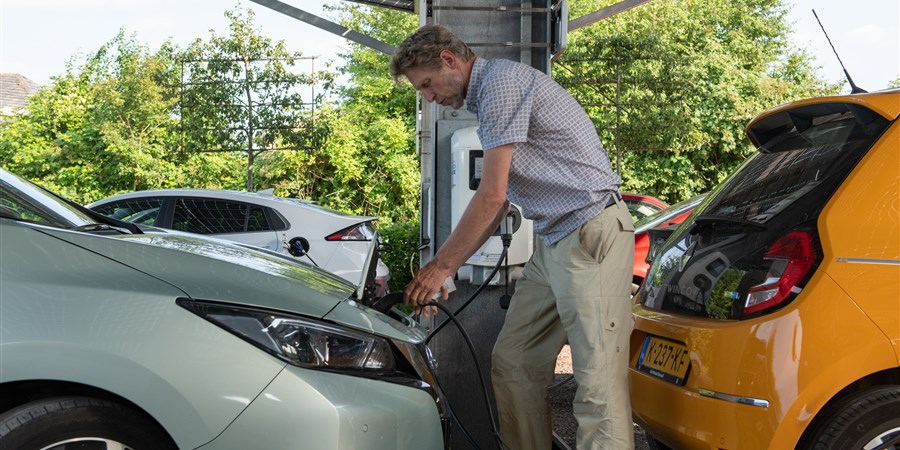
Emissions of nitrogen oxides (NOx) have fallen almost every year since 2005. Nitrogen oxides are released when fossil fuels are combusted, so they are found in exhaust fumes, for example. Most NOx emissions come from transport. These emissions have dropped over recent decades because passenger cars and heavy goods vehicles have been subject to ever stricter emissions standards. The decrease in emissions is likely to continue as more and more clean cars and trucks are on the road in the Netherlands. There are increasing numbers of all-electric vehicles on our roads, for example, and these do not emit NOx.
| Transport (million kg) | Industry & waste (million kg) | Energy sector (million kg) | Households (million kg) | Agriculture, forestry & fishing (million kg) | Services, water & construction (million kg) | |
|---|---|---|---|---|---|---|
| 2005 | 204.7 | 37.0 | 55.2 | 17.0 | 11.4 | 7.5 |
| 2006 | 202.9 | 35.4 | 52.0 | 14.2 | 12.2 | 7.3 |
| 2007 | 194.3 | 34.6 | 43.4 | 12.3 | 14.4 | 6.6 |
| 2008 | 184.8 | 34.8 | 38.1 | 13.3 | 17.3 | 6.8 |
| 2009 | 159.5 | 31.0 | 32.3 | 13.0 | 16.5 | 6.2 |
| 2010 | 157.6 | 33.1 | 32.6 | 14.5 | 18.5 | 7.1 |
| 2011 | 157.1 | 33.1 | 29.1 | 10.8 | 16.0 | 5.4 |
| 2012 | 147.8 | 31.4 | 28.3 | 10.9 | 14.5 | 5.7 |
| 2013 | 134.2 | 28.8 | 29.5 | 10.9 | 13.2 | 5.6 |
| 2014 | 120.2 | 28.1 | 26.8 | 8.0 | 10.2 | 4.4 |
| 2015 | 116.9 | 28.0 | 27.6 | 8.1 | 10.2 | 4.5 |
| 2016 | 113.0 | 28.2 | 23.4 | 7.8 | 8.6 | 4.3 |
| 2017 | 113.3 | 27.3 | 21.5 | 7.0 | 8.0 | 4.3 |
| 2018 | 114.6 | 26.7 | 20.7 | 6.7 | 7.2 | 3.8 |
| 2019 | 107.1 | 26.4 | 19.4 | 6.3 | 6.0 | 3.7 |
| 2020 | 85.2 | 25.1 | 17.0 | 6.0 | 4.9 | 3.2 |
| 2021 | 83.1 | 24.6 | 17.1 | 6.7 | 5.2 | 3.5 |
| 2022 | 79.3 | 22.9 | 16.3 | 5.7 | 3.8 | 3.0 |
| 2023 | 77.6 | 20.8 | 13.6 | 5.0 | 3.8 | 2.9 |
| 2024 | 78.1 | 20.9 | 13.3 | 5.0 | 3.8 | 2.6 |
| Source: CBS, RIVM | ||||||
Households are the main source of particulate matter
In 2024, the majority of particulate matter was emitted by households, mainly as a result of burning wood in stoves and fireplaces. Emissions from households have fallen since 2005, but the fall has been nowhere near as large as it has been for transport (which was the largest source of emissions in 2005). European emissions requirements for new cars, such as particulate filters, have led to a fall in emissions of particulate matter.
| Transport (million kg) | Industry & waste (million kg) | Energy sector (million kg) | Households (million kg) | Agriculture, forestry & fishing (million kg) | Services, water & construction (million kg) | |
|---|---|---|---|---|---|---|
| 2005 | 8.5 | 4.3 | 1.6 | 8.4 | 0.6 | 0.6 |
| 2006 | 7.8 | 4.2 | 1.9 | 8.4 | 0.6 | 0.6 |
| 2007 | 7.0 | 4.2 | 1.3 | 8.1 | 0.6 | 0.6 |
| 2008 | 6.1 | 3.8 | 1.2 | 8.3 | 0.7 | 0.6 |
| 2009 | 5.0 | 3.9 | 0.6 | 8.2 | 0.7 | 0.6 |
| 2010 | 4.6 | 4.0 | 0.4 | 9.0 | 0.7 | 0.6 |
| 2011 | 4.3 | 4.2 | 0.3 | 7.7 | 0.7 | 0.5 |
| 2012 | 3.9 | 3.6 | 0.2 | 8.0 | 0.7 | 0.5 |
| 2013 | 3.5 | 3.6 | 0.3 | 8.1 | 0.7 | 0.5 |
| 2014 | 3.2 | 3.5 | 0.4 | 7.0 | 0.7 | 0.5 |
| 2015 | 3.1 | 3.5 | 0.5 | 7.3 | 0.7 | 0.6 |
| 2016 | 3.0 | 3.7 | 0.4 | 7.1 | 0.7 | 0.6 |
| 2017 | 2.9 | 3.9 | 0.3 | 6.7 | 0.7 | 0.6 |
| 2018 | 2.9 | 3.8 | 0.3 | 6.5 | 0.7 | 0.6 |
| 2019 | 2.7 | 3.7 | 0.3 | 6.1 | 0.7 | 0.6 |
| 2020 | 2.3 | 3.4 | 0.2 | 5.6 | 0.7 | 0.6 |
| 2021 | 2.3 | 3.6 | 0.2 | 5.7 | 0.7 | 0.7 |
| 2022 | 2.2 | 3.4 | 0.2 | 5.8 | 0.6 | 0.7 |
| 2023 | 2.2 | 3.0 | 0.2 | 5.8 | 0.6 | 0.9 |
| 2024 | 2.2 | 3.0 | 0.2 | 5.7 | 0.6 | 0.8 |
| Source: CBS, RIVM | ||||||
Sources
Related items
- News release - More than 1 million plug-in cars in the Netherlands