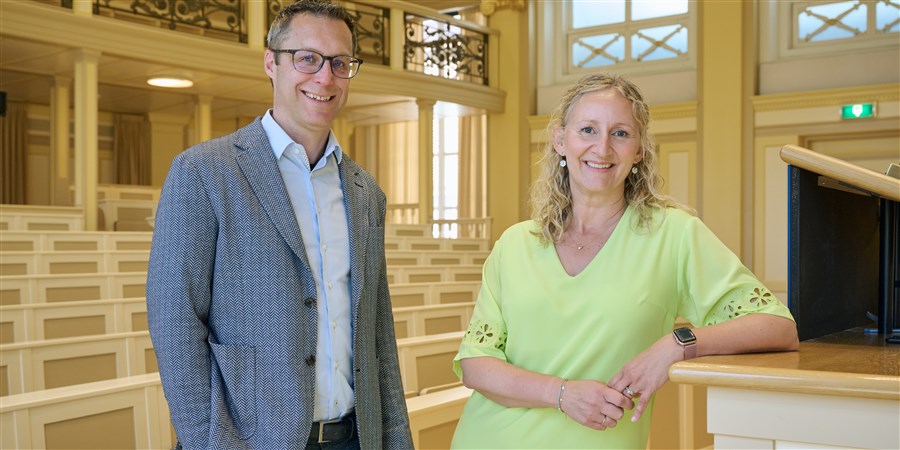
Statistics Netherlands has a long tradition of providing crime statistics and related data. ‘We used to publish several different surveys: the Safety and Quality of Living Environment Survey, the Victimisation Survey and the Police and Population Monitor. In 2005, these were merged to create the Safety Monitor: a population-based study of safety, living environment and the most common types of crime.’ There is also a long history of partnership between Statistics Netherlands and Leiden University, although this was only formalised recently. Maarten Kunst, Professor of Criminology at Leiden, gives an example: ‘Professors Wouter Buikhuisen and Jan van Dijk designed and developed the first victimisation surveys in the 1970s and, before long, these were being carried out by Statistics Netherlands.
Burglary: a high-impact crime?
The impact of crime on victims is an important focus area for Moons. Are there differences between victims in the perceived impact following crimes of a similar nature? And might it be possible to identify vulnerable groups that require specific support? Moons: ‘Take the example of a family whose home has been broken into. Perhaps for the husband it’s just a question of changing the locks and sorting out the insurance claim. But his partner might have trouble sleeping for months because she keeps reliving the burglary in her mind.’
Perceived severity of crime
‘The Dutch Penal Code sets down the penalties for certain criminal acts. The assumptions that underlie those penalties relate to the severity of the crime,’ explains Professor Kunst. ‘For example, the penalty for murder or manslaughter is more severe than the penalty for theft. And the punishment for burglary is different from the punishment for a violent crime. But actually, we don’t know whether the assumptions about the supposed severity of a crime correspond to what victims actually experience. And it’s possible that violent crime may have a more severe impact on people in a particular socio-demographic group than people in another group, for instance. Hopefully, further research will give us the answers to these questions.’
The Crime Harm Index
‘In the Netherlands, we have the Crime Harm Index,’ explains Moons. ‘This tells us which offences are subject to the most severe penalties, on average. We would also like to attach a similar weight to the psychological consequences of crime for victims and survivors: which crimes have the most serious psychological effect, on average? Then we can ask victims whether they have received any support, how this was provided and whether they think it could have been better. This should result in better, more targeted support for victims.’ Kunst: ‘I also hope that, thanks to this new chair, more victims will be able to access the justice system and find their way around in it.’
Building a safer society
What benefits will the chair bring for Statistics Netherlands? ‘It will help us to extract more knowledge from our data,’ says Moons. ‘Since 2021, for example, we have been conducting surveys on the impact of crime on victims. This chair will help us to achieve a wider reach and ensure that the data can be used better in the scientific community. New scientific insights will also enable Statistics Netherlands to improve its own products – by refining its questionnaires, for example. The chair that I now hold should also be seen in the context of the Statistics Netherlands multi-annual programme 2024–2028. This states, among other things, that one of the major challenges facing the Netherlands is improving safety. Organised crime undermines and weakens the rule of law. Statistics Netherlands wants to help address this challenge by making ever more data available on various aspects of safety.’
Closing the legitimacy gap
Kunst also outlines the benefits that the chair will bring for Leiden University and, ultimately, for society as a whole. ‘Many citizens are concerned about how criminal law actually plays out in practice. They often find the decisions that are made by courts difficult to fathom. One possible explanation is that punishments do not always reflect the impact experienced by victims and survivors, or the views of the general public. There is a legitimacy gap. An important research theme in our faculty is the legitimacy of the criminal justice system. This chair will make it possible to explore research questions in this area, such as the impact of crime. You could compare it to the Crime Harm Index: how does the punishment for a crime compare to the impact of that crime on victims and survivors? I think this will help us to address the legitimacy gap.’
Greater awareness
On a related subject, Kunst also explains that the criminologists and lawyers of the future are educated at Leiden University. ‘You’re talking about people who will soon be working with victims of crime on a professional basis. Some as practitioners, and others as policymakers. Perhaps the greatest benefit that we will see from this chair is that students will become more aware of the impact that crime has on citizens.’
Better scientific substantiation
Victims have acquired more rights in recent years. The right to be informed of support options, for instance. Kunst: 'These kinds of rights are often enacted with the idea that the government knows what’s best for victims. But often, procedures are not based on thorough scientific evidence, and it is unclear whether the needs of victims are truly being met. Ideally, we would like a more evidence-based approach. The new chair should contribute to that.’